

Buy Total War: Attila Celts Culture Pack PC key
Offers
















Trailers & screenshots
1 / 10


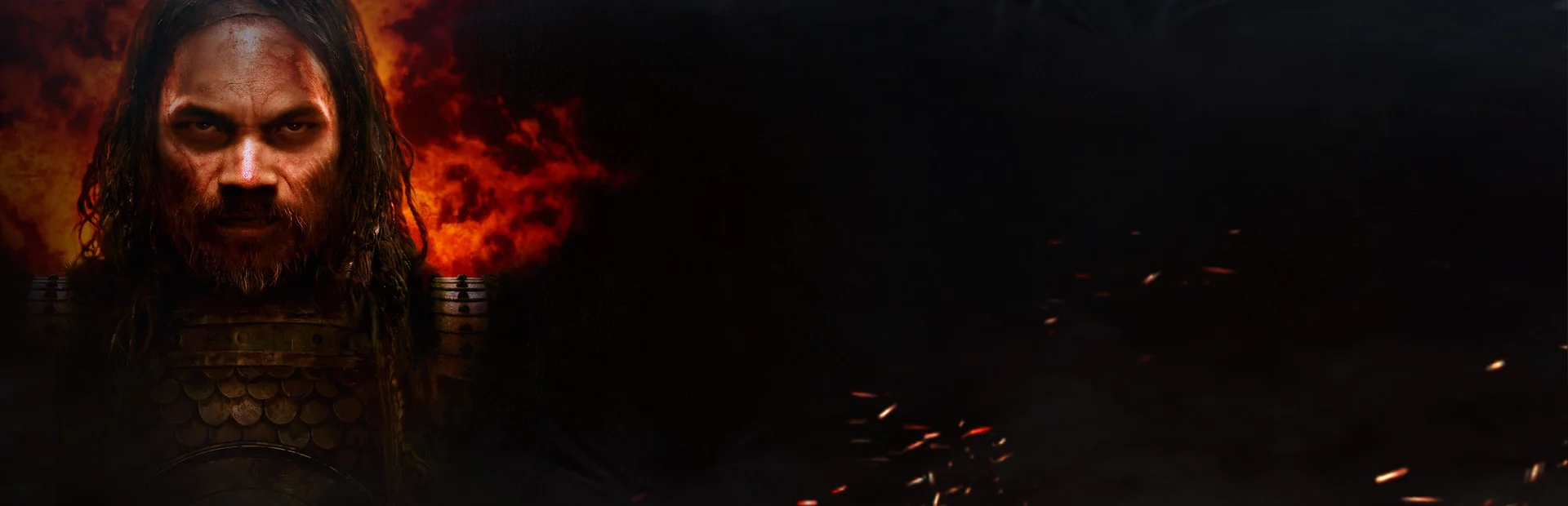
About Total War: Attila Celts Culture Pack
Total War: Attila Celts Culture Pack adds three playable factions to Total War: ATTILA: the Picts, the Caledonians and the Ebdanians. You can use them in single-player or multiplayer campaigns, and in custom or multiplayer battles. As Western Rome’s control of the Britannic Isles weakens, the factions seek independence and the return of their ancestral lands, while warlords from Germania and the Nordic regions look toward the Tin Islands.
Celtic factions
All three factions rely on ambush tactics and raiding. Every unit in their rosters has Guerrilla Deployment, allowing almost the entire army to deploy anywhere on the battlefield, including behind enemy lines. Celtic factions are not all-rounders, so their strengths reward experienced commanders. Sacking, looting and raiding are important sources of income and bring additional gameplay bonuses.
The factions also have distinct abilities. The Ebdanians combine raiding with a talent for sacking and looting. The Picts, known as the Children of the Night, can choose to attack at night and gain morale bonuses in darkness; they favour heavy assaults and berserker units, and fight at night on land and at sea. Caledonian agents are more efficient at their tasks and more likely to succeed, reflecting the faction’s skill in sabotage and assassination.
Campaign events
The Cycle of the Ollam Ri is a linked narrative event chain inspired by Celtic mythology. You guide a legendary hero through branching choices, and Ollam Ri becomes available as an army general when the story concludes, with traits shaped by your decisions. Each faction also receives new Celtic missions.
Celtic armies
The factions share a three-tier Celtic roster, including Sighthound Spears heavy wardogs, Mormaer heavy cavalry and Scatha's Teachers, elite light infantry. Each faction also has its own units:
- Ebdanians: Gallowglass (Tier 2 very heavy sword infantry), King's Warband (Tier 3 very heavy sword infantry), Ebdani Raiders (Tier 2 light javelin skirmishers), Kerns (Tier 2 light javelin skirmishers), Righdamhna (Tier 3 light javelin skirmishers), Ebdani Cavalry Raiders (Tier 2 light skirmisher cavalry), Chosen Raiders (Tier 3 light skirmisher cavalry) and King's Fianna (Tier 3 very heavy melee cavalry general).
- Caledonians: Cateran Brigade (Tier 2 very heavy spear infantry), Horse Whisperers (Tier 3 very heavy spear infantry), Caledonian Axemen (Tier 2 very heavy axe infantry), Highland Archers (Tier 2 light bow infantry), Elite Highland Archers (Tier 3 light bow infantry), Noble Archers (Tier 2 medium bow infantry general) and Royal Archers (Tier 3 medium bow infantry general).
- Picts: Pictish Axemen (Tier 2 light axe infantry), Pictish Swordsmen (Tier 2 medium sword infantry), Black Blades (Tier 3 light sword infantry), Pictish Berserkers (Tier 2 light axe berserker infantry) and Followers Of Morigan (Tier 3 very heavy axe infantry general).
Buildings and technology
Celtic factions have a farming chain that does not depend on fertility: Enclosures can be upgraded to Cattle Pounds and then a Booley, creating self-sufficient livestock herds. Their raiding chain progresses from a Raiders’ Assembly Point to a Raiders’ Gathering Place, Raiders’ Base and Raiders’ Hall. Each tier takes one turn to build and provides significant bonuses to raiding adjacent regions, along with public order and garrison bonuses that can help in newly conquered regions. The pack also adds Celtic-themed technologies, unique raiding buildings and bespoke skill trees for Celtic generals.
Three new Tier 5 Prestige Buildings—the Bards’ Hall, the Temple of Belenus and the Central Market—provide significant bonuses. Along with meeting their technological requirements, you must achieve specific feats in religion, trade or warfare to unlock them.
Faction histories
The Ebdanians rule from Hibernia, as the Greeks and Romans called the island, at a time when they may be able to shape its future. Their home lies on the eastern shore between the Buvinda and Oboca estuaries, near the site of modern Dublin. Hibernian society revolves around clans, extended families tied by kinship, loyalty and often common ancestry. Clans are led by chieftains within a strict hierarchy, and authority generally passes through the male line, though fostering and adoption are also common. The island’s tribes have never been conquered by Rome, but evidence such as Roman coins shows that they traded with the Empire. From a defensible capital, the Ebdanians can seek to rule the Celtic world.
The Caledonians defend northern Britannia against Rome and block the way north for invaders. They are believed to have formed from Pictish tribes and people fleeing the Roman advance, living in hillforts and farms across the Scottish Highlands. Tacitus records their defeat at the Battle of Mons Graupius, after Roman legions forced them from the hills into open battle, away from the guerrilla tactics suited to the terrain. In the centuries that followed, they repeatedly raided into Britannia, often successfully, and continue to resist Roman rule.
The Picts defend their homeland in the far north of the Britannic Isles. Roman emperors Hadrian and Antoninus built walls across the region to control movement and trade, with Hadrian’s wall sometimes understood as a means of keeping the Picts and other northern peoples out. The Picts left no written records, but Roman accounts describe their resistance; the name Picti may have been a Roman term for northern tribes who painted or tattooed themselves before battle. In AD 367–368, they took part in the Great Conspiracy, coordinating raids with the desertion of the Roman garrison along Hadrian’s Wall in an attempt to wrest control of Britannia and northern Gaul. At the start of the 5th century, they must renew old alliances to reclaim their country.
Frequently asked questions
The best price for Total War: Attila Celts Culture Pack is $1.70 at Difmark. That is 81% less than on Steam, where it costs $8.99. 11 shops have an offer that activates in your country.
Some are. This page only shows offers that activate in your country; offers for other regions, or with no stated region, are left out. To see the offers for another country, change your country at the top of the page.
Every key we list activates on Steam. Redeem the key there and Total War: Attila Celts Culture Pack stays in your library for good.
Yes, with a small risk. Publishers create keys to sell in other shops, which is why a key can cost less than in the official store, and once you activate it the DLC is yours to keep, just like a store purchase. On average 1–2% of keys fail, so check the shop's buyer protection before you buy: the official store does not refund keys bought elsewhere.
No. Total War: Attila Celts Culture Pack is DLC and only works with Total War: Attila.
The minimum requirements for Total War: Attila are: Windows Vista, GeForce 8800 GT, Intel Core 2 Duo, 3 GB RAM, 35 GB storage. It also runs on macOS. The recommended specs are in the System requirements section.
Yes. Total War: Attila has multiplayer and a single-player mode. It supports online co-op, online PvP and LAN play.
Buy Total War: Attila Celts Culture Pack 81% cheaper than on Steam.
Total War: Attila Celts Culture Pack is available for 81% less in shops such as Difmark, YUPLAY, or GameBoost.
Steam lets publishers create keys to sell in other shops. Once you activate a key, the game is yours to keep, just like a store purchase.
Disclaimer: CD keys have an inherent 1–2% average failure rate. Check the shop terms for buyer protection info. Steam offers no buyer protection for keys bought in other shops and doesn't refund them.
Similar games
Total War: Three Kingdoms
−81%$7.55
$39.9919 offers
Total War: Warhammer II
−85%$8.68
$59.9919 offers
Total War Saga: Thrones of Britannia
−63%$7.39
$19.9916 offers
Medieval II: Total War
−78%$4.26
$19.9919 offers
Age of Empires IV
−62%$14.94
$39.9912 offers
Sid Meier's Civilization VI
−91%$5.33
$59.9922 offers
Steel Division 2
−68%$12.53
$39.9917 offers
Praetorians
−80%$0.99
$4.9918 offers
Age of History II
$5.99
1 offer
Hearts of Iron IV
$11.73
15 offers
Grand Tactician: The Civil War (1861-1865)
$44.99
3 offers
Knights of Honor
−75%$2.49
$9.9918 offers