

RimWorld Ideology
Offers















Trailers & screenshots
1 / 12
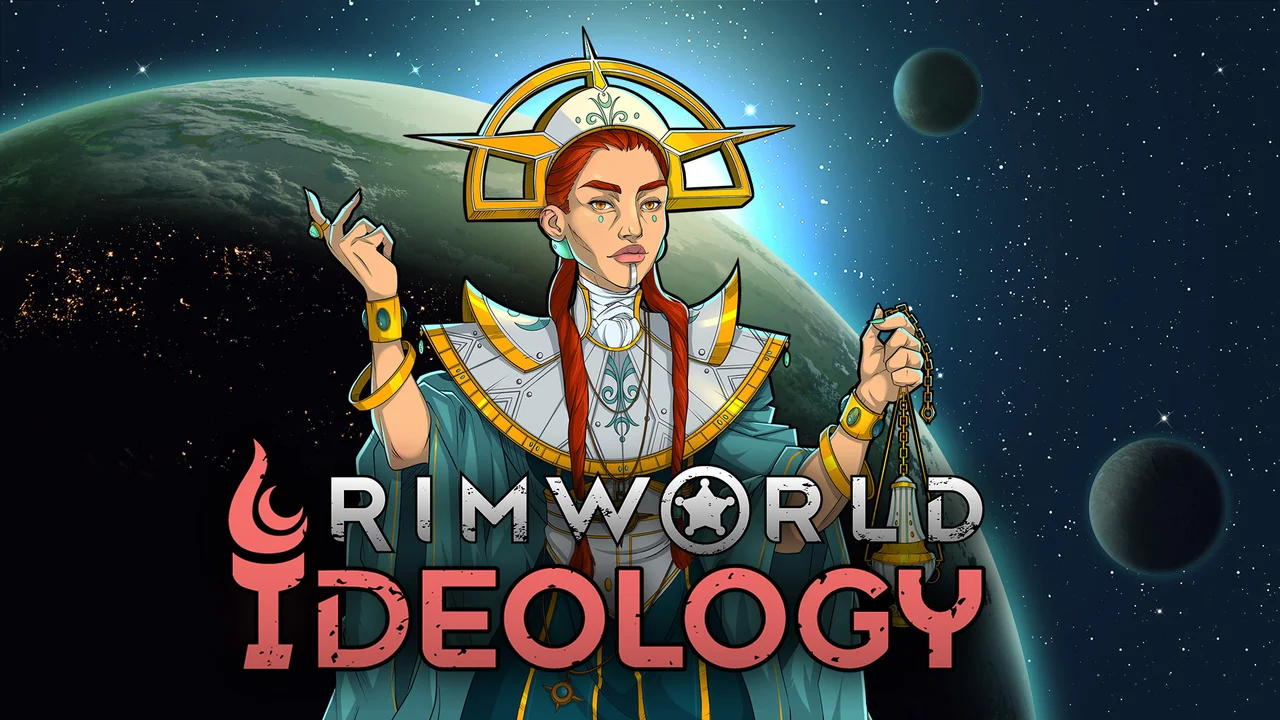

About RimWorld Ideology
RimWorld Ideology is an expansion that gives each person in the game a belief system. You create belief systems from one to four core memes, then customize their precepts, rituals, social roles, buildings and visual styles. Beliefs shape colonists’ preferences and behavior, and can guide how your colony lives, works and deals with other people.
Beliefs and precepts
Memes represent core ideas, and combining them allows for a near-infinite variety of belief systems. Examples include Animal personhood, Rancher, Pain is virtue, Darkness, Tunneler, Tree connection, Nudism, Blindsight, Cannibal, Transhumanist, Raider, Proselytizer, High life, Nature primacy, Human primacy, Female supremacy, Male supremacy, Supremacist, Loyalist, Guilty, Individualist and Collectivist.
Each meme can lead to different precepts: specific rules or preferences about subjects such as food, organ use, execution, animals, apostasy, weapons, charity, relationships, comfort, corpses, drugs, research, slavery, technology, nature and work. You can edit and randomize precepts to fine-tune a belief system. Beliefs also have an underlying structure—Ideological, Theistic, Animist or Archist—which shapes their appearance and the narratives the game generates, but has no gameplay effects.
Colonists can try to convert one another, and you can assign wardens to convert prisoners or use a moral guide’s abilities. People with proselytizing beliefs attempt to convert others more intensely, which can cause conflict; some colonists are easier to convert than others, depending on their traits. You can bring the whole colony into one belief system or maintain a mix of beliefs to benefit from their different strengths.
Roles and rituals
Each belief system offers formal social roles. Leaders give inspirational speeches, support nearby allies in combat, encourage harder work, participate in certain rituals, and can accuse people of crimes and hold trials. Moral guides support colonists’ mental and spiritual well-being, lead rituals, help the sick recover, counsel sad colonists, reassure believers and convert non-believers. Specialists become more effective at a primary skill and gain a related ability, but focus on that skill and stop doing some other work; you can assign multiple specialists.
Belief systems also define player-controlled rituals, whose effects depend partly on how they are carried out. They include dance and drum parties, social festivals, tree celebrations, burn circles, smoke circles, skylantern festivals, gladiator duels, sacrifices, cannibal feasts, scarification, blinding and funerals. For example, a dance party in a large hall with giant speakers may attract recruits or reveal an ancient complex, while a party in a field without music may not bring the same benefits.
Other rituals include leader speeches, trials, public executions and ceremonies that connect a colonist to a Gauranlen tree. At a trial, the leader accuses someone of crimes and both sides argue before witnesses; a convicted person can be punished without social consequences. A public execution is the killing of a prisoner, and goes best after a trial finds them guilty.
Gauranlen trees
Gauranlen trees may sprout near your colony. These orange trees support small creatures called dryads, which protect their tree in return. A colonist can connect with a tree in a ceremony, then prune it over time to strengthen the bond and gain influence over its dryads. Colonists who venerate trees can connect more effectively and influence dryads more efficiently; only those who truly respect trees can control their reproduction.
You can direct dryads into different castes: Carriers haul items, Clawers deal damage, Barkskins absorb attacks, Woodmakers generate wood, Medicinemakers produce herbal medicine, Berrymakers produce berries, and Gaumakers produce Gauranlen sprouts for growing new trees. A colony centered on tree connection can build an economy and an army from its orchard and dryads.
Relics and quests
Every belief system has relics, which can be objects such as an ancient sword, skull or piece of armor. Multi-part quests lead you to information about a relic and ultimately to the ancient temple that holds it. You can then raid the temple, evade or defeat its security systems, and install the relic in a reliquary. Relics help convert others to your beliefs and attract pilgrims who bring gifts.
Relic quests include exploring ancient complexes with threats such as cryptosleeping soldiers, insects, sleeping mechanoids, unstable fuel stores and pursuing pirates; hacking a spacedrone that lands beside your colony while defending against other treasure hunters; and visiting a tribal village that venerates a terminal. The villagers permit a visit, but attack if you try to hack the terminal. You can attack from outside or enter peacefully and attempt a quick theft.
Other quests include procedurally generated ancient complexes filled with loot and interacting threats, which you can reach by shuttle or caravan. You might wake ancient soldiers to fight pirates or ignite a fuel node to burn out insects in another room. Temporary encampments near your colony range from farms and logging sites to mines and hunting lodges, with different defenders and loot; they can be targets for raids, especially for aggressive belief systems. Beggars also arrive seeking help. You can aid them, betray them, enslave them, recruit them or sell them, and charitable beliefs make colonists especially happy when they help needy travelers.
Buildings and styles
Belief systems unlock buildings for rituals, including altars, ideograms, lecterns, pews, kneel pillows and sheets, drums, lightballs, loudspeakers, Christmas trees, pyres, sacrificial flags, effigies, cannibal platters, burnbongs and incense shrines. They can also unlock functional buildings such as autobongs, dark lamps and torches, slab beds, sleep accelerators, biosculpter pods, neural superchargers, gibbet cages and bonsai plant pots.
Belief systems have aesthetic styles that affect rituals, furniture, floors, apparel and art. Colonists may enjoy items that match their style and reject those associated with other beliefs. Styles include Rustic, Totemic, Spikecore, Morbid, Techist, Animalist, Hindu, Christian, Islamic and Buddhist, and one belief system can combine several. Styles also change clothing and artwork: for example, Animalist recon armor may have animal-face helmets, Morbid believers may wear skull helmets, and Spikecore pirates may wear dusters with spiked shoulders. They also add style-specific floors and coverings, such as Morbid skull tiles and carpets, Spikecore tiles and plates, Totemic tiles and boards, Hex carpets and tiles, Mindbend carpets, Rustic rugs, and Morbid, Totemic and Animalist slabs.
Beliefs can make colonists want particular apparel, including Authority caps, Tailcaps, Burkas, Flophats, Slicecaps, Shadecones, Visage masks, Torture crowns, Robes, headwraps and broadwraps. Colonists can also have belief-related tattoos, beards and hairstyles. At a styling station, you can change tattoos and hair or beard styles, and recolor garments with dyes from the tinctoria crop.
Slavery
You can enslave prisoners or buy slaves from traders. Slaves perform most of the same tasks as colonists, but work more slowly. Belief systems differ in their views of slavery, from condemning it to accepting or demanding it.
Slaves can be armed and directly commanded in combat, but may rebel if they get the opportunity or are not sufficiently suppressed. Wardens can suppress them with periodic threats, while terror statues and gibbet cages provide passive suppression. Collars and body straps can also help keep them under control.
The archonexus
Once your colony is wealthy, you can sell it and begin again with selected colonists and animals. In return, you receive a piece of a map leading to the archonexus, a conduit through which an ancient machine superintelligence is said to affect the physical world. This quest partially resets the game, letting you keep chosen characters while starting a new colony in a new place.
Each new colony begins near an ancient archotech structure with increasing psychic influence. Studying the structures reveals further map pieces; after collecting three, you can find the archonexus, invoke its power and transcend physical reality through the mind of the machine god. The endgame includes credits accompanied by a song by Alistair Lindsay.
Frequently asked questions
The best price for RimWorld Ideology is $15.15 at YUPLAY. That is 24% less than on Steam, where it costs $19.99. 9 shops have an offer that activates in your country.
Some are. This page only shows offers that activate in your country; offers for other regions, or with no stated region, are left out. To see the offers for another country, change your country at the top of the page.
Every key we list activates on Steam. Redeem the key there and RimWorld Ideology stays in your library for good.
Yes, with a small risk. Publishers create keys to sell in other shops, which is why a key can cost less than in the official store, and once you activate it the DLC is yours to keep, just like a store purchase. On average 1–2% of keys fail, so check the shop's buyer protection before you buy: the official store does not refund keys bought elsewhere.
No. RimWorld Ideology is DLC and only works with RimWorld.
The minimum requirements for RimWorld are: Windows 7, Intel HD Graphics 4000, Intel Core 2 Duo, 4 GB RAM, 1 GB storage. It also runs on macOS. The recommended specs are in the System requirements section.
No. RimWorld is a single-player game.
Buy RimWorld Ideology 24% cheaper than on Steam.
RimWorld Ideology is available for 24% less in shops such as YUPLAY, Difmark, or GameBoost.
Steam lets publishers create keys to sell in other shops. Once you activate a key, the game is yours to keep, just like a store purchase.
Disclaimer: CD keys have an inherent 1–2% average failure rate. Check the shop terms for buyer protection info. Steam offers no buyer protection for keys bought in other shops and doesn't refund them.
Similar games
Oxygen Not Included
$24.99
2 offers
Empires of the Undergrowth
−75%$4.88
$19.9815 offers
Songs of Syx
$24.99
2 offers
Planetbase
−50%$7.49
$14.9913 offers
Blacksmith Master
−61%$7.75
$19.9917 offers
Factorio
−12%$30.65
$35.0013 offers
Prison Architect
−80%$5.85
$29.9917 offers
Ixion
−72%$9.45
$34.9923 offers
The Universim
−91%$2.41
$29.9921 offers
The Crust
−75%$7.77
$31.9921 offers
Stardeus
$29.99
2 offers
Colony Survival
$24.95
1 offer