

Geoplanetical
Offers


Trailers & screenshots
1 / 41

About Geoplanetical
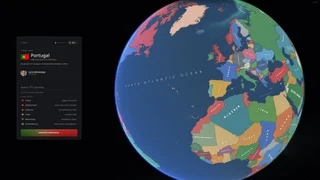
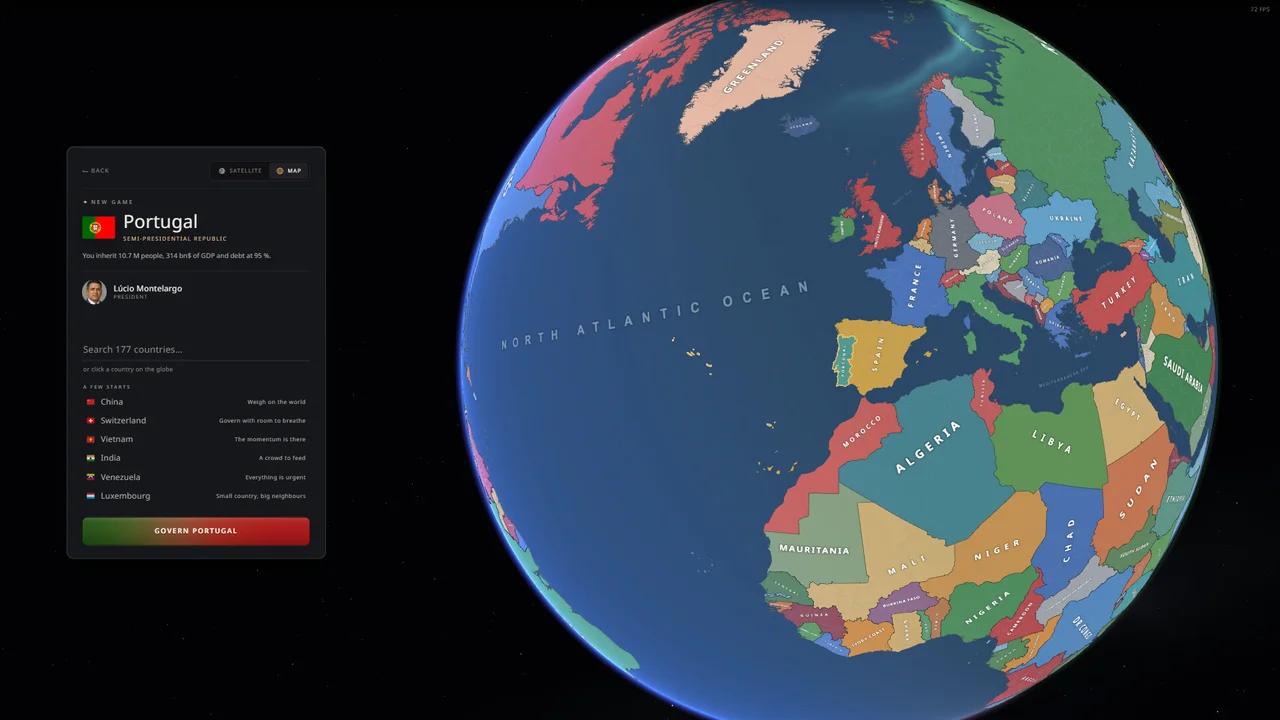
Geoplanetical is a single-player geopolitical simulation that begins on January 1, 2026, with the war in Ukraine already underway. Choose the government or an opposition party in one of more than 200 nations and territories, then manage its economy, debt, population and political institutions. Events emerge from the simulation and from decisions made by you and other governments.
You can pursue policies, pass or oppose laws, manage public services and budgets, campaign in elections, negotiate with other countries and take part in wars. Other governments also set budgets, change laws, hold elections, impose sanctions and propose alliances; depending on the game rules, they can start wars, including against you.
Govern and legislate
Your choices affect people, production, public finances and your ability to stay in power. Raise taxes or change the retirement age, expand or shrink the state, regulate or deregulate, and disarm or build up the military. There is no ideology score to pursue. The Agenda tracks approaching deadlines, problems and events, while reports, ministers' advice and explanations of approval and stability help you follow changes.
Laws cover matters such as minimum wage, working hours, paid leave, retirement age, abortion, the death penalty, cannabis, religion, immigration limits and asylum rules. Cannabis policy ranges from prohibition and decriminalization to medical use, regulated sales or a state monopoly. You can check vote forecasts, set your party's voting line and follow debates, executive approval, vetoes and constitutional review; procedures depend on the country's institutions and your office.
Elections follow the calendars of each chamber and elected office, including partial renewals where the constitution provides for them. Coalitions can form, cohabitation can occur, and you can call early elections when your office allows it. Results arrive live on election night. You can raise party funds, recruit activists, campaign and make up to three promises; whether you deliver affects your credibility and influence.
If you lose an election, you can continue in opposition, try to bring down the government with a motion of no confidence when allowed, take control of the governing party or switch to another actor in the same world. Opposition parties with seats can also propose bills. Through Cablegram, you can ask an opposition leader to support a bill or a foreign leader to vote with you at the UN, though agreement is not guaranteed.
Change institutions
More than 100 institutional choices cover electoral systems, upper houses, parliamentary powers, executive vetoes, judicial review, term lengths and limits, selection of the head of state, emergency powers and succession. Monarchies have heirs, regencies and royal decrees. Institutional changes affect who can make or block decisions and how power passes between governments; some reforms take effect at the next election.
Manage society
Nearly 20 social groups have distinct income before and after tax, wealth, satisfaction and militancy. They respond to living costs, unemployment, housing and public services. During strikes, you negotiate with unions and compare each union's response to your offer; promises to change a law or budget still need to be carried out.
You can facilitate, contain or disperse protests, order an armed crackdown or deploy the army. People may die, unrest can spread, and an army with low loyalty may not fully carry out your orders. Housing policies include rent controls that spread as leases renew, limits on eligible mortgage rate resets and funding for social housing.
Public services include health, education, justice, police, prisons and administration. Set policies, staffing targets and pay, then build schools, hospitals, police stations, courts and prisons province by province. Training and recruitment take time. You can also change pensions, minimum old-age support, child benefits and unemployment insurance, including eligibility and benefit levels.
The simulation tracks migration by age and skill, along with brain drain, communities and diasporas. You can strengthen epidemic surveillance, introduce public-health measures, restrict travel from affected countries, fund vaccine research and run vaccination campaigns. New diseases can emerge if enabled in the game rules, and vaccination uses staff who would otherwise provide other care. Natural-disaster policies cover prevention and responses to wildfires, floods, cyclones, earthquakes and tsunamis, as well as rebuilding provinces and sending aid abroad.
Run the economy
Set income-tax brackets, social contributions, VAT by product category and customs duties. Decide spending, issue or repay debt, and control the policy rate where your monetary system allows it, or leave that decision to an independent central bank. Debt crises can involve dwindling currency reserves, lost access to financial markets and default. IMF programs provide financing in tranches tied to budget reviews; governments with the necessary monetary powers can also create money, with effects on prices and credibility.
You can recapitalize a troubled bank with or without nationalizing it, provide liquidity to a solvent bank, restructure a company, manage a sovereign wealth fund, impose capital controls or close the stock exchange. Nationalize or privatize part of a sector, or convert eligible private holdings into cooperatives; compensation, available funds and the law affect what is possible.
Investment programs can bring production home, expand exports, create jobs or reduce a critical dependency, but results depend on what the economy can build and supply. Negotiate tariffs by product, introduce targeted surcharges, respond to trade disputes and impose sanctions. Trade blocs including the EU, USMCA, Mercosur, ASEAN and AfCFTA can require collective decisions. More than 100 goods move through around 30 sectors and international trade, with companies investing and hiring according to demand and available resources.
Energy and resource policy includes placing power plants on the globe, building storage and interconnections, securing fuel, and prospecting or drilling. You can suspend or close extraction sites, nationalize them with compensation or by seizure, or privatize them, and build strategic reserves. Within OPEC, you can vote on quotas, exceed your quota or start a price war if you are an eligible swing producer.
Invest in electrification, hydrogen and new production methods, and follow global emissions and warming. You can renovate buildings, expand cooling access and prepare shelters for extreme weather. New targets need funding, equipment and time before they affect the country. Transport projects include ports, airports and freight connections, including specialized terminals for energy exports; you can restrict passage through straits or canals you control. You can also set tourism policy, organize festivals and championships, or bid for the Olympics, with venues, security, access and funding affecting whether events go ahead.
Negotiate and use force
Negotiate defense pacts, guarantees, non-aggression agreements, military access and intelligence sharing. Arrange foreign bases, provide or request military support in money or equipment, and fund civilian aid. In diplomatic crises, you can draw red lines, mobilize at a border, deploy ships, patrol disputed waters, restrict maritime traffic or apply economic pressure. You can also negotiate settlements, accept mediation, make concessions or withdraw demands; other governments can use these tools too.
You can seek a UN Security Council seat and vote on resolutions, with permanent members able to veto. Eligible countries can apply to join the European Union, vote on its rules and candidates, campaign in European elections, adopt the euro when they meet the conditions or leave the EU. Respond to NATO collective-defense calls and take part in decisions and procedures involving the ECB, OPEC, IMF and IAEA.
Intelligence operations include building networks abroad, stealing state secrets, sabotaging power grids, factories or extraction sites, infiltrating terrorist organizations and attempting to capture their members. At home, you can investigate intrusions, run counterintelligence operations and publish evidence of foreign involvement when you have enough. Where conditions allow, you can fund a military coup abroad, but a successful coup changes that country's government without giving you control of it. At home, monitor army loyalty, pay a bonus or purge the high command; if a coup begins, you can negotiate, resist with loyal forces or mobilize public support. You cannot organize your own domestic coup to seize power.
Fight wars
When declaring war, choose grounds such as defending an ally or seeking conquest, and set territorial claims. The game indicates whether your case is viewed as legitimate or as aggression, and you can review expected international responses, ministers' positions and costs to stability, approval and existing treaties before confirming. Allies do not automatically join offensive wars, though you can ask them to take part.
Formations fight across a detailed grid, where terrain, supply, encirclements, air superiority and control of the seas affect operations. Provincial control follows the ground held by your forces. Give your general staff directives such as holding positions, applying limited pressure or launching a major offensive; set priorities between theaters and choose a targeting doctrine. You can order an amphibious landing or leave the staff to initiate one, with the staff handling unit movements and the landing plan.
Order equipment ranging from tanks to military satellites, funding it through the defense treasury. Orders use domestic industry where possible, with eligible foreign producers able to supply equipment when needed. Production and delivery take time. Set replenishment targets for ammunition and missiles, and keep enough money available to pay for them. You can also launch air and missile campaigns, then decide whether to stop or escalate to a ground invasion.
In occupied territory, choose whether to administer, repress or expel. Hostility can lead to revolt, while civilian casualties, displacement and refugees affect the population and responses abroad, including relations and sanctions. War support erodes with losses, time and lost ground; if it collapses, your military can capitulate even with forces remaining. Peace options include annexing declared objectives you occupy, imposing an available political status, or seeking a ceasefire or armistice. A ceasefire suspends fighting without settling sovereignty.
You can run a declared or clandestine nuclear program, deal with non-proliferation rules and respond to IAEA inspections. Set nuclear doctrine and alert levels, plan strikes in the nuclear war room and determine how to retaliate. A game rule controls whether AI nuclear powers may strike first when facing an existential threat. Soot from nuclear strikes can reduce sunlight, cool the climate and damage food and solar production far beyond the countries hit.
Explore further systems
You can negotiate autonomy, independence or the transfer of an administered territory, including paid transfers and referendums where required. Buying territory is a political agreement, not a way to purchase any province you select. Research covers more than 200 technologies across 19 fields, through national programs, licenses, scientific cooperation and joint industrial projects. Agreements can support research but do not grant discoveries instantly, and technologies must spread through the economy before their full effects appear.
The Moon can become the focus of sites, facilities, crews, settlers, supply operations and return cargo. Appoint governors and set colonial charters, with paths to autonomy and independence. You can extract helium-3 and bring it back to Earth, then develop fusion through research and an operating demonstrator before commercial deployment.
A 3D globe shows day and night, clouds and city lights. Leaders age, die and are succeeded, and TV news bulletins with a presenter report major events. You can rename your nation, draw or import its flag, or select a historical flag. Presentation mods can change names, portraits and flags.
Continue without an end date
There is no year limit or hidden countdown. Over time, generations age, populations grow or shrink, deposits run out, and forests and fish stocks recover or decline according to how they are used. Losing an election or a war does not automatically end a campaign. Losing all your territory or suffering a catastrophic population collapse can end your country's run, but you can choose another actor and continue in the same world. There is no fixed victory condition.
Campaign options
Every game begins on January 1, 2026, with starting economies, institutions and international relationships based on that period. The war between Russia and Ukraine is already active; there are no alternative historical start dates or scripted campaigns. Leaders and parties are fictional, and new leaders are generated as people leave power or die. You can play as more than 200 nations and territories, including administered territories such as Greenland, Puerto Rico and Hong Kong. Some microstates, including Monaco and the Vatican, are not playable. You can switch country or political role during a campaign from the pause menu.
Choose Learn to play for a guided introduction, Essential guidance for lighter help, or Help on demand. You can pause at any time, use three game speeds and keep named saves alongside autosaves. A built-in cheat console lets you experiment, but cheats that alter the simulation disable achievements for that campaign.
At the start, choose Leaders' temperament: Calm, Normal or Tense. This setting affects how inclined political figures are to negotiate or use force and is fixed for the campaign. You can also allow or forbid AI war declarations and AI nuclear first use, and set natural disasters and new pandemics to None, Rare, Normal or Frequent. Those settings can be changed during a campaign. Disabling new wars does not end existing conflicts or prevent countries from defending an ally.
Geoplanetical is single-player. Its mods are for presentation, covering leader and party names, portraits, country flags and additional flags to choose from. You can create them in the Mod studio or use Steam Workshop mods, then enable them in Manage mods; they load when you start the game. Mods do not change the simulation or its rules.
Frequently asked questions
The best price for Geoplanetical is $24.99 at Steam. It is the only shop with an offer that activates in your country.
The minimum requirements for Geoplanetical are: Windows 10, GeForce GTX 1050 Ti, Intel Core i5-8400, 12 GB RAM, 5 GB storage. It also runs on macOS. The recommended specs are in the System requirements section.
No. Geoplanetical is a single-player game.
Mostly, yes. Valve rates Geoplanetical as Playable on the Steam Deck: it runs, but may need some manual setup.
Yes. Geoplanetical is the full base game. You need nothing else to play it.
Steam lets publishers create keys to sell in other shops. Once you activate a key, the game is yours to keep, just like a store purchase.
Disclaimer: CD keys have an inherent 1–2% average failure rate. Check the shop terms for buyer protection info. Steam offers no buyer protection for keys bought in other shops and doesn't refund them.
Similar games
Democracy 3
−70%$7.49
$24.9912 offers
The Political Process
$14.99
3 offers
Turkish Throne
−20%$2.39
$2.991 offer
Tropico 6
−77%$8.97
$39.9921 offers
Plutocracy
$24.99
3 offers
SuperPower 2: Steam Edition
−86%$1.36
$9.9910 offers

Big Ambitions
$25.99
4 offers
Nimby Rails
$19.99
1 offer

Long Live the Queen
−60%$3.99
$9.999 offers
Supermarket Simulator
−55%$8.83
$19.9918 offers
Another Brick in the Mall
$16.99
2 offers
Power & Revolution: 2019 Edition
−55%$22.49
$49.991 offer