

Command: Modern Operations Command:MO - Falklands
Offers













Screenshots
1 / 10

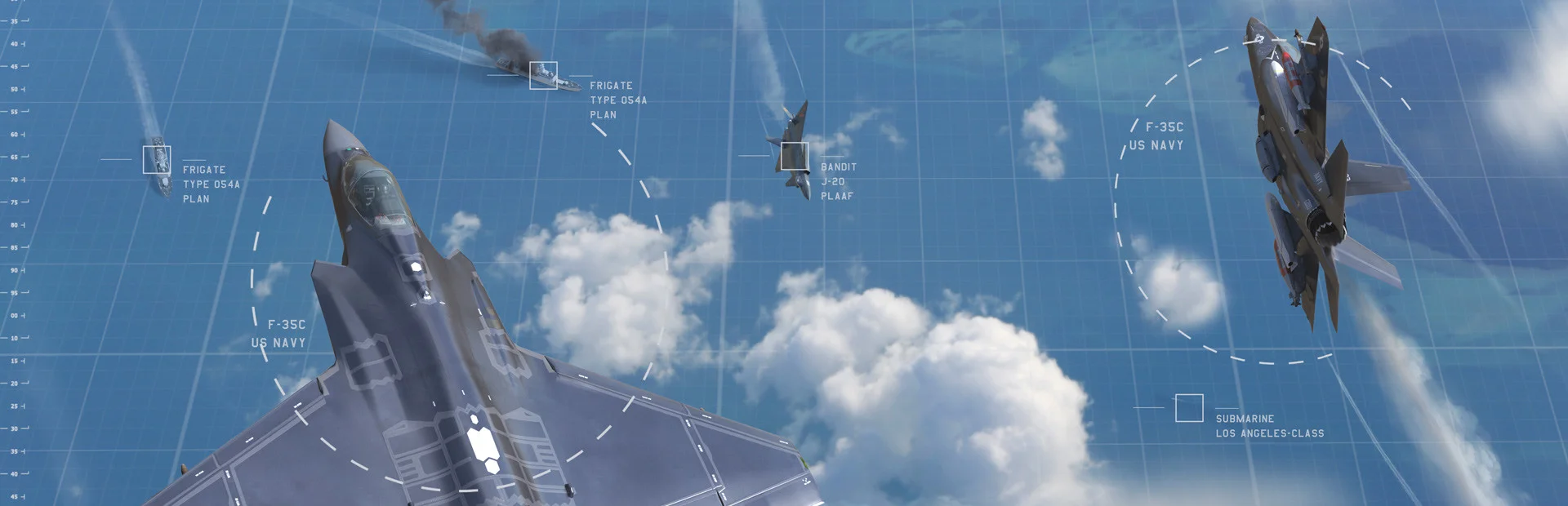
About Command: Modern Operations Command:MO - Falklands
Command: Modern Operations Command:MO - Falklands is an add-on featuring scenarios based on the 1982 war between the United Kingdom and Argentina over the Falkland Islands. It follows the events that led to the conflict, Argentina’s amphibious invasion, and the UK’s decision to send a task force to recover the islands.
The conflict
The islands had been disputed for decades. In 1965, the United Nations called on the UK and Argentina to settle the sovereignty dispute. The UK Foreign and Commonwealth Office regarded the islands as a nuisance and a barrier to trade in South America. Though confident of British sovereignty, it was prepared to cede them to Argentina and sought to make them dependent on Argentina, hoping this would make the islanders more amenable to Argentine rule.
In 1977, amid rising regional tensions, Prime Minister James Callaghan secretly sent two frigates and the nuclear-powered submarine HMS Dreadnought to the South Atlantic in Operation Journeyman. In 1980, Minister of State for Foreign Affairs Nicholas Ridley visited the Falklands to promote a leaseback scheme, which the islanders strongly opposed. After reporting to parliament in December, he was attacked for what was seen as a sellout. At a private committee meeting that evening, he reportedly warned: “If we don't do something, they will invade. And there is nothing we could do.”
Argentina was facing economic stagnation and large-scale civil unrest against the military junta that had ruled since 1976. In December 1981, a new junta took power, headed by General Leopoldo Galtieri, Air Brigadier Basilio Lami Dozo and Admiral Jorge Anaya. The government hoped military action would rally patriotic feeling over the islands, distract from economic problems and human rights violations during the Dirty War, and shore up the junta’s declining legitimacy.
Tensions escalated on 19 March 1982, when Argentine scrap-metal merchants, infiltrated by Argentine Marines, raised their country’s flag on South Georgia Island. The act was later considered the war’s first offensive action. The Royal Navy ice patrol vessel HMS Endurance sailed from Stanley to South Georgia on 25 March in response. Suspecting that the UK would reinforce its South Atlantic forces, the Argentine junta decided to move quickly.
The invasion and response
On 2 April 1982, Argentine forces launched amphibious landings known as Operation Rosario. Amphibious Commandos first attacked the empty Moody Brook barracks, then moved on Government House in Stanley. The local Royal Marines detachment put up a fierce but brief defence. After the 2nd Marine Infantry Battalion arrived with Assault Amphibious Vehicles, the governor ordered a ceasefire and surrendered.
The Argentine junta had reason to believe the UK would not intervene. Financial pressures had led the UK to reduce its military throughout the 1970s, retire its last large aircraft carrier and scrap or sell warships, including two Type 42 destroyers to Argentina. The 1981 Defence Review proposed further cuts: selling the amphibious ships Fearless and Intrepid, selling the new VSTOL carrier Invincible to Australia, retiring the old carrier Hermes, and reducing the frigate and destroyer forces. The account suggests that an Argentine invasion in 1983 or 1984 might have left the UK without means to respond.
Prime Minister Margaret Thatcher immediately declared that the islands should be recovered at all costs, though her cabinet was divided. Some questioned whether the UK should fight over a barren, distant territory; the Argentine author Jorge Luis Borges described the dispute as “a quarrel between two bald men over a comb”. Admiral Henry Leach argued that the UK could retake the islands, despite the risks, because failure to act would damage its standing in the world. His appeal helped settle the debate, and the UK went to war.
A task force centred on the VSTOL carriers Hermes and Invincible, with warships, landing ships, and support and replenishment vessels, assembled in two days and sailed for the South Atlantic under Admiral John Woodward. A diplomatic solution remained theoretically possible, but both sides had come too close to the brink to back down without consequences.
Scenarios and combat
The add-on includes 13 scenarios and 2 bonus scenarios, with units that were not present or available during the war. The scenarios were designed by a Falklands War veteran. You manage units that served during the conflict as well as units that had already been taken out of service, and fight in the air, on the surface and underwater. You guide your forces to victory in a multi-sided campaign.
Frequently asked questions
The best price for Command: Modern Operations Command:MO - Falklands is $10.82 at YUPLAY. That is 45% less than on Steam, where it costs $19.99. 8 shops have an offer that activates in your country.
Some are. This page only shows offers that activate in your country; offers for other regions, or with no stated region, are left out. To see the offers for another country, change your country at the top of the page.
Every key we list activates on Steam. Redeem the key there and Command: Modern Operations Command:MO - Falklands stays in your library for good.
Yes, with a small risk. Publishers create keys to sell in other shops, which is why a key can cost less than in the official store, and once you activate it the DLC is yours to keep, just like a store purchase. On average 1–2% of keys fail, so check the shop's buyer protection before you buy: the official store does not refund keys bought elsewhere.
No. Command: Modern Operations Command:MO - Falklands is DLC and only works with Command: Modern Operations.
The minimum requirements for Command: Modern Operations are: Windows 7, 4 GB RAM, 40 GB storage. It runs on Windows only. The recommended specs are in the System requirements section.
Yes. Command: Modern Operations has multiplayer and a single-player mode. It supports online co-op and online PvP.
Buy Command: Modern Operations Command:MO - Falklands 45% cheaper than on Steam.
Command: Modern Operations Command:MO - Falklands is available for 45% less in shops such as YUPLAY, Difmark, or Wyrel.
Steam lets publishers create keys to sell in other shops. Once you activate a key, the game is yours to keep, just like a store purchase.
Disclaimer: CD keys have an inherent 1–2% average failure rate. Check the shop terms for buyer protection info. Steam offers no buyer protection for keys bought in other shops and doesn't refund them.
Similar games
Squad
−64%$14.05
$39.9925 offers
Wargame: Red Dragon
−10%$8.94
$9.9913 offers
Arma 3
$11.61
10 offers
ICBM: Escalation
−58%$12.42
$29.9918 offers
Syrian Warfare
−80%$2.69
$13.9912 offers
Call to Arms
$14.45
5 offers
Empire: Total War
−79%$4.17
$19.9917 offers
Sea Power: Naval Combat in the Missile Age
−20%$39.99
$49.996 offers
Hearts of Iron IV
−75%$12.19
$49.9915 offers
Fleet Command
−92%$0.74
$9.9914 offers
Steel Division 2
−68%$12.53
$39.9916 offers
Ultimate General: Civil War
$29.99
4 offers