

Wars Across the World Expanded Edition
Offers





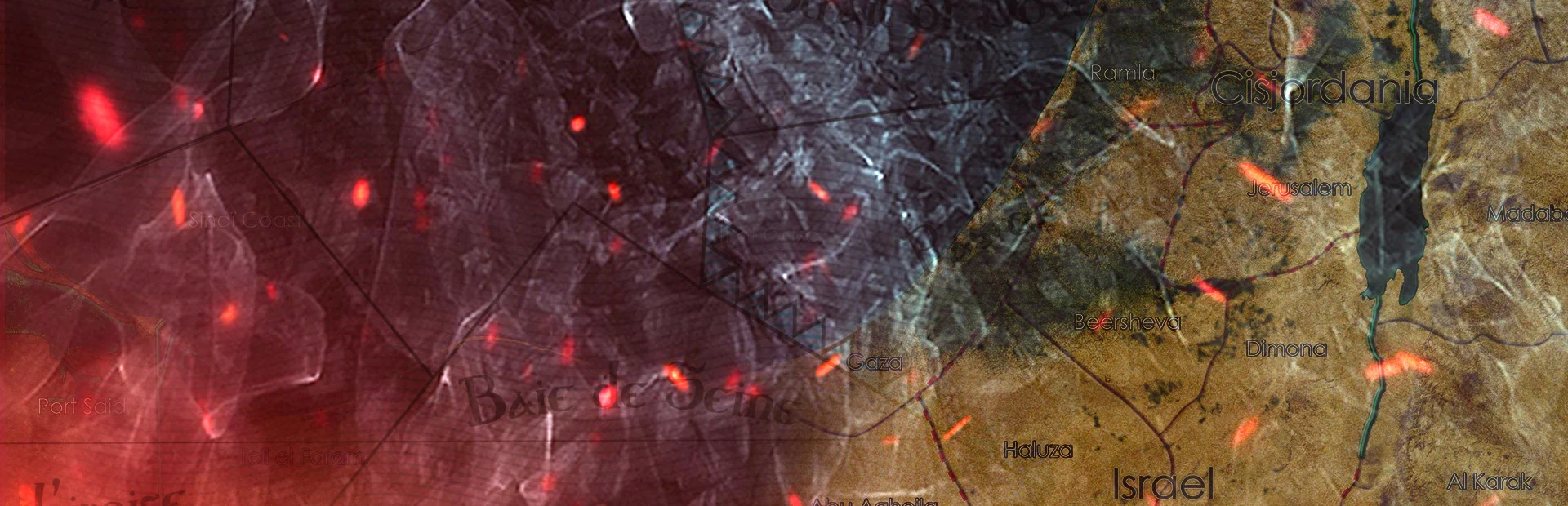
About Wars Across the World Expanded Edition
Wars Across the World is a turn-based strategy game built around one rules system for conflicts ranging from prehistoric times to the present. Its scenarios can cover historical wars as well as alternate-history, fantasy and science-fiction conflicts, on land, at sea, in the air or in outer space. The game includes a tutorial and 10 scenarios, and supports solo play, hot seat and play-by-email (PBEM).
The scenarios
The base pack includes these 10 scenarios:
- HAMILKAR 264: The First Punic War, the first war between Rome and Carthage.
- HASTINGS 1066: Normans, Vikings and Saxons compete for the crown of England.
- SARATOGA 1777: A battle in the War of Independence.
- WATERLOO 1815: Napoleon’s final campaign.
- BULL RUN 1861: The opening grand battle of the American Civil War.
- MISSOURI 1861: The fight for control of a decisive western state.
- NORMANDIE 1944: The landing operation on the beaches of France.
- BULGE 1944: Germany’s final offensive in the west during World War II.
- SIX DAYS 1967: The Six-Day War between Israel and its Arab neighbours.
- BERLIN 1945: The Soviet defeat of the Nazis.
Turns and maps
Players take turns using an I-go-you-go system, with each player controlling one side; a side can include more than one nation. Maps are divided into regions with varied terrain and, in some scenarios, structures such as ports, fortresses and airports. Regions can also provide income when the scenario requires it. The scale varies by scenario: a land unit might represent a battalion or an entire army, a region might cover a few square miles or a country, and a turn can span a few hours or many years.
Forces and battles
When a scenario requires players to maintain or buy forces, or acquire event cards, it uses a simple income system. Land, naval and air units include infantry, cavalry, artillery, guerrillas, submarines, aircraft carriers, fighters, elephants and anti-aircraft batteries. Units can be combined into stacks. Leaders improve their stacks’ base combat values, contribute morale values used to check victory or defeat, and are required to launch attacks.
When opposing stacks occupy the same region, a battle begins. Combat is resolved semi-tactically over two successive rounds. The game calculates each side’s bonuses, penalties and morale, and allows event cards to be played; units on both sides usually fire simultaneously. Losses are recorded as hits and panics, which affect the army’s morale and can lead to routs, pursuit and breakthroughs.
Event cards and scenarios
Each side receives multiple packs of event cards that can affect alliances, income, movement, weather, leadership, troop numbers and quality, and tactical aspects of battles. Players learn the shared rules once, then read about a new scenario’s specific properties and content before playing. The game also provides access to an editor for customizing scenarios and designing new ones.
Frequently asked questions
The best price for Wars Across the World Expanded Edition is $8.49 at Eneba. 2 shops have an offer that activates in your country.
Some are. This page only shows offers that activate in your country; offers for other regions, or with no stated region, are left out. To see the offers for another country, change your country at the top of the page.
Every key we list activates on Steam. Redeem the key there and Wars Across the World Expanded Edition stays in your library for good.
Yes, with a small risk. Publishers create keys to sell in other shops, which is why a key can cost less than in the official store, and once you activate it the game is yours to keep, just like a store purchase. On average 1–2% of keys fail, so check the shop's buyer protection before you buy: the official store does not refund keys bought elsewhere.
Yes. Wars Across the World Expanded Edition is an edition of Wars Across the World. It includes the full game and extra content.
The minimum requirements for Wars Across the World are: Windows 7, GeForce 9600, 2 GB RAM, 750 MB storage. It also runs on macOS. The recommended specs are in the System requirements section.
Yes. Wars Across the World has multiplayer and a single-player mode.
Similar games
Unity of Command II
−88%$3.31
$29.9913 offers
Axis & Allies 1942 Online
−95%$0.99
$19.9914 offers
Panzer Corps
$0.74
16 offers
Unity of Command
−97%$0.29
$9.999 offers
Sid Meier's Civilization V
−93%$1.81
$29.9920 offers
Vietnam '65
−87%$1.23
$9.998 offers
Strategic Command WWII: War in Europe
−85%$5.94
$39.9917 offers
Battle Academy
−97%$0.41
$14.999 offers
Space Hulk
−92%$1.51
$19.998 offers
Company of Heroes 2
−82%$3.42
$19.9917 offers
Hex of Steel
−2%$24.43
$24.992 offers
Pike and Shot: Campaigns
−96%$1.25
$39.9910 offers