

Buy Queen's Court: A Duel of Dignitaries PC key
Offers


Trailers & screenshots
1 / 7


About Queen's Court: A Duel of Dignitaries
Queen's Court: A Duel of Dignitaries is an online competitive card game in which players try to win two rounds. Each player has two piles of cards, and the player with the lowest spread between the numbers showing on their piles wins a round.
Set up and play
Each player starts with two face-up cards, three cards in hand and a glove card. The remaining cards form a draw deck in the center. Players take turns clockwise, beginning with the next player in that order at the start of each round.
In the first half of a round, you play one card from your hand onto any player's pile, including your own, then draw from the center deck. If your play creates a zero spread between two piles, you draw two cards instead of one. This half ends when the center deck is empty.
Cards and spreads
A pile's number is the number showing on its top card. The spread is the difference between the numbers on a player's two piles: for example, piles showing 5 and 2 have a spread of 3, while two piles showing 9 have a spread of 0.
Queen cards are wild. Played on a pile, a Queen takes the value of the adjacent pile, creating a zero spread. If both piles show Queens, that is the highest possible spread and an automatic loss for that player if it remains at the end of the round, regardless of the other players' spreads.
Locking piles
In the second half of the round, each player adds a glove card to their hand. A glove played on a pile prevents anyone from playing on it for the rest of the round. Both piles can be covered; in that case, the card immediately below each glove determines the spread.
Players keep taking turns playing cards onto piles. When a player uses the last card in their hand, their spread is locked and no one can play on their piles. Players with cards remaining continue, skipping those whose piles are locked. If only one player still has cards, they must play them on their own piles. If both of their piles are covered by gloves, the round ends.
Round and game wins
A round ends when the last card in hand is played or all piles are locked. The player with the lowest spread wins and receives a red gem to mark the round win.
If players tie on spread, the player with the fewest total cards in their two piles wins. If they also tie on pile counts, each tied player gains a round win, except for any tied player who has already won a round. A tie cannot win the game: play continues until someone wins outright. The game goes to the first player to win two rounds.
Online rank points
Local play awards no rank points. In online play, each round win earns 100 rank points per opponent, while each round loss costs 100 points. These points are awarded or deducted per round; when spread and pile counts are tied, the rank points are split between the winners.
Online lobbies can also use an ante set by the host. Players need rank points at least equal to the ante, which is deducted at the start of the game. At the end, the game winner receives winnings equal to twice the ante.
Challenges
Each game gives players three challenges, which can earn extra rank points. Challenges are worth 50, 100 or 200 rank points, awarded at the end of the game. Incomplete challenges cost no points, and challenges have no value in local play.
Frequently asked questions
The best price for Queen's Court: A Duel of Dignitaries is $3.99 at Steam. It is the only shop with an offer that activates in your country.
The minimum requirements for Queen's Court: A Duel of Dignitaries are: Windows 11, 8 GB RAM, 500 MB storage. It runs on Windows only. The recommended specs are in the System requirements section.
Yes. Queen's Court: A Duel of Dignitaries has multiplayer and a single-player mode. It supports online PvP.
Yes. Queen's Court: A Duel of Dignitaries is the full base game. You need nothing else to play it.
Steam lets publishers create keys to sell in other shops. Once you activate a key, the game is yours to keep, just like a store purchase.
Disclaimer: CD keys have an inherent 1–2% average failure rate. Check the shop terms for buyer protection info. Steam offers no buyer protection for keys bought in other shops and doesn't refund them.
Similar games

Uno
−61%$3.87
$9.9917 offers

Through the Ages
−50%$7.99
$15.994 offers
Tabletop Simulator
−67%$6.48
$19.997 offers
Gomoku Let's Go
$2.99
1 offer
Just Go
−26%$7.31
$9.992 offers
Puzzline
$3.99
1 offer

Wingspan
−82%$3.49
$19.9919 offers

Splendor
−91%$0.87
$9.9920 offers

Armello
−81%$4.73
$24.9912 offers
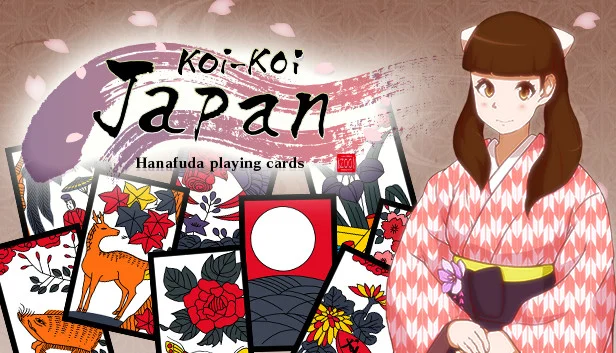
Koi-Koi Japan
−83%$1.63
$9.9912 offers

Love Letter
−96%$0.26
$6.9917 offers

Ticket to Ride: Classic Edition
$1.44
3 offers