

Buy Neon Valley: Revenge PC key
Offers


Trailers & screenshots
1 / 22


About Neon Valley: Revenge
Neon Valley: Revenge is an online shooter set in Neon Valley, an underground cyberspace network built by hackers after the government won a global cyber war. The network is a refuge where good and bad coexist, and its Colosseum draws challengers into battles for skill, high scores and infamy. You fight in a Battle Suit, using weapons, gadgets and agile movement to complete objectives or battle other players.
Neon Valley
The Colosseum is both an entertainment complex and a hub for the wider underground world. Black market programmers test virtual weapons there, dealers wager on battles, designers show off fashion code, and map editors create battlegrounds. Behind the Colosseum and the city, shadowy groups support the rebellion, profit from the market or influence how the network is run.
The Colosseum cycles through modes with different objectives, while players can also fight one another or work together against a common enemy. Objectives and kills earn points, with additional scoring multipliers for actions such as ricochet kills, combining gadgets, consecutive wall jumps and survival.
Battle Suits
You control a Battle Suit, a program interface that provides freedom of movement and lets you bring offensive and defensive equipment into battle. Suits can sprint, crouch, slide, dash and wall jump, with partial air control to adjust your trajectory. These actions consume stamina, which regenerates after a cooldown; dashing uses energy to accelerate with boosters attached to the suit’s lower back.
Crouching can help you take cover behind low objects and present a smaller target, and it also enables sliding while moving. A sprint followed by a slide gives the suit a short dash and an extended slide. Sliding in the air slightly increases downward speed, while foliage can provide stealth. Wall jumps let you cover more distance, reach higher ground and make consecutive jumps.
Each suit has a force-field shield that forms its first layer of defense. When it breaks, you can take cover to let it regenerate or risk taking damage to your health.
Weapons and gadgets
The arsenal includes pistols, rifles, lasers and ricochet bullets, along with gadgets such as gravity modifiers, teleportation tools, shields and grapple hooks. You can equip primary and secondary weapons, or replace the primary slot with Akimbo, which lets you dual-wield secondary weapons. Winning matches can unlock additional equipment through support from anonymous arms dealers.
The Ninjato is a melee weapon with high and low attacks, a jump attack and a slide attack. High and low attacks each have three moves and can be combined into different chains; movement direction affects how far attacks lunge. The jump attack lets you double-jump before striking, while the slide attack dashes forward with a vertical slash.
Gadgets include four grenades: vision distortion, teleportation, explosive and force-push sticky. Other tools include defensive shields that can also serve as platforms, a pulse clear that absorbs incoming bullets, and a gravity multiplier that grounds objects and stuns enemies. Movement gadgets help you cross terrain: a booster pack propels you in the direction you aim, a grapple hook carries you farther but signals your movement, and a boost pad can launch enemies or set them up in a vulnerable position. Gadgets have limited ammunition.
Maps and modes
Battlegrounds range from close quarters to large structures built for vertical combat, with different environments that favor some play styles and challenge others. Three named maps are described:
- Taiyo: A Japanese village with a central trading area, narrow alleys, buildings with breakable walls, surrounding forests with dense foliage, a high waterfall overlook and obscured paths.
- Cube: A training map with blocks arranged for practicing ricochet shots and wall jumps. Its sections suit different weapon classes, and patrol drones provide a tougher test against corporate attack systems.
- Monolith: A map shaped by a mysterious object that crashed into its center. Activating its trigger changes the map’s gravitational properties, while long cracks across the terrain favor long-range combat.
The Colosseum’s modes include:
- Invader: Waves of attack drones spawn above the Colosseum and track players, using different abilities to hinder or damage them.
- Lava: On selected maps, rising lava gradually consumes the terrain. Reach a counter-hack objective to push it back, then hold the point against spawning fireballs. More players at the point increase hacking speed and the points awarded, but also bring more fireballs. Touching lava launches you upward. Scoring can be multiplied by survival time, wall-jump count and time spent off the ground, with bonus points when up to three other players reach the point.
- Data: Carry a virus to a quarantine zone before it infects your code, while avoiding debris falling from the breach and opposing players. Reaching a zone within 15 seconds of its appearance with the virus grants a large multiplier. If you die, the virus detaches and searches for another target.
Progression and challenges
Completing objectives and reaching required point totals earns a multi-pass, reflecting the favor of the dragons who benefit from the matches. Anonymous backers can also provide rewards. Multi-passes grant access to restricted equipment and areas.
The Mainframe is the city at the center of Neon Valley, where gladiators can access customization options and sample technologies from The Dragons. Entry is restricted and requires a multi-access pass, which can be earned through The Gates. These challenges include minigames based on variations of the main modes and a waypoint race, designed to test and train players.
Enemies and equipment
Enemy drones and other threats have distinct behaviors and weaknesses. Attack drones fire small, fast projectiles and orbit their targets when close. Roll drones move along the ground through foliage and crevices, then use a tractor beam to hold targets in place for attack drones; reaching the beam’s edge can counter its pull. Laser drones have forward shields that deflect most energy weapons and fire damaging beams, but their limited turning speed can be exploited.
Other enemies include a virus that corrupts what it touches and an electric ball that dodges bullets while hunting players. Cube’s patrol drones are training bots with extra shielding and an exposed vent on their backs.
Suit cameras and customization
Each Battle Suit has a drone camera that provides a wider view and can be switched on or off. The visor and drone camera support adjustable magnification, including when you are not using a scoped weapon. In third person, you can switch the camera’s shoulder position to peek around corners or adjust your aim, and look around by rotating the camera around the suit. If the drone camera is shot, it deactivates and the view switches to first person.
Character customization items are rewards for gladiators who take part in combat and impress spectators. Access to customization options is among the features unlocked through The Mainframe.
Frequently asked questions
The best price for Neon Valley: Revenge is $14.99 at Steam. It is the only shop with an offer that activates in your country.
The minimum requirements for Neon Valley: Revenge are: Windows 7, Radeon HD 7800, Intel Core i5-4670K, 4 GB RAM, 1 GB storage. It runs on Windows only. The recommended specs are in the System requirements section.
Yes. Neon Valley: Revenge has multiplayer and a single-player mode. It supports online co-op and online PvP.
Yes. Neon Valley: Revenge is the full base game. You need nothing else to play it.
Steam lets publishers create keys to sell in other shops. Once you activate a key, the game is yours to keep, just like a store purchase.
Disclaimer: CD keys have an inherent 1–2% average failure rate. Check the shop terms for buyer protection info. Steam offers no buyer protection for keys bought in other shops and doesn't refund them.
Similar games
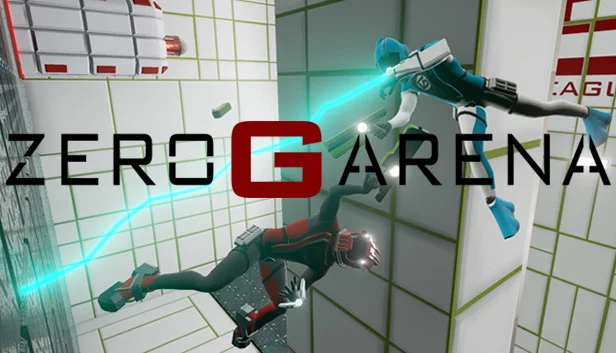
Zero G Arena
−97%$0.27
$9.999 offers
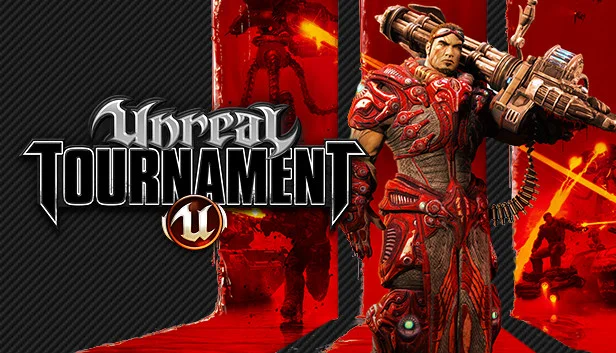
Unreal Tournament III: Black Edition
$77.66
1 offer
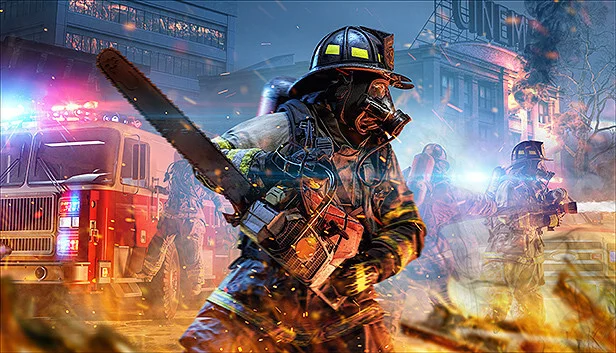
Into the Flames
$19.99
1 offer
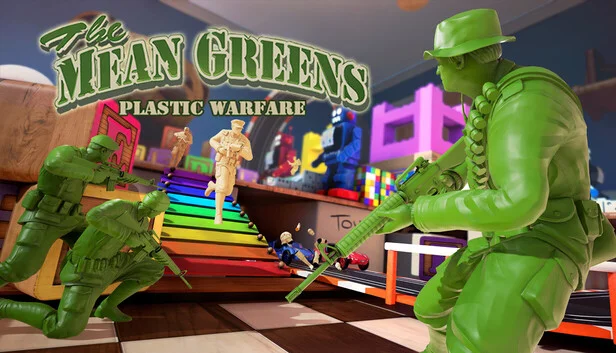
The Mean Greens: Plastic Warfare
−50%$4.99
$9.999 offers
Strike Vector
$8.99
5 offers

Call Of Unity
$1.99
1 offer
Quake III Arena
−59%$6.07
$14.9911 offers
Warhammer 40,000: Space Marine
−84%$6.18
$39.9912 offers

What the Box?
$4.99
9 offers
Timberman VS
−73%$0.52
$1.9911 offers
Apewar
$0.99
1 offer
Star Wars: Battlefront
−32%$6.74
$9.9912 offers