

Buy JR East Train Simulator Utsunomiya Line E233-3000 series PC key
Offers


Trailers & screenshots
1 / 12


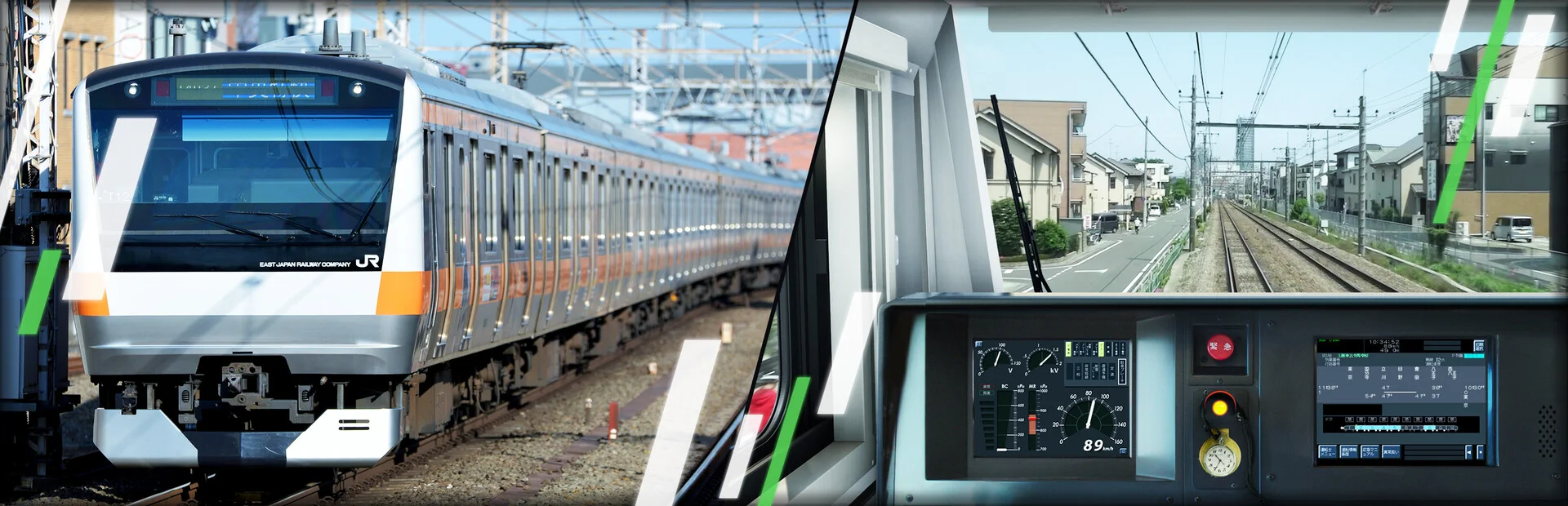
About JR East Train Simulator Utsunomiya Line E233-3000 series
JR East Train Simulator Utsunomiya Line E233-3000 series is a route add-on in which you drive inbound trains from Kuroiso to Tokyo on the Utsunomiya Line. The route covers 163.3 km and 34 stations, with ATS-P security equipment. You travel through the Kanto Plain, passing countryside, residential suburbs and central-city buildings as the scenery changes from Tochigi Prefecture to Tokyo.
The Utsunomiya Line
“Utsunomiya Line” is the name used for the section of the Tohoku Line between Tokyo and Kuroiso. The line has used this name since March 10, 1990, following a proposal from local governments along the route. Express and sleeper trains to Tohoku and Hokkaido once ran here; regular and rapid services now make up most of the schedule.
At Utsunomiya Station, the service pattern divides. South of the station, the Ueno Tokyo Line and Shonan Shinjuku Line carry commuters and students in the Tokyo metropolitan area. North of Utsunomiya, services operate with one driver between Oyama and Koganei, and on some early-morning trains between Koganei and Utsunomiya. The route continues via Nasu-Shiobara, Utsunomiya and Omiya toward Ueno and Tokyo.
Route landmarks
The journey includes tunnels, rivers, rail yards and connections with other lines. Notable points along the route include:
- Kuroiso to Nasushiobara: the Shinkansen Nasushiobara detainment line comes into view on the right as you approach Nasushiobara.
- Nozaki to Yaita: pass through the first and last tunnels on the Utsunomiya Line section.
- Ujiie to Hōsyakuji: the Karasuyama Line joins from the left.
- Hōsyakuji to Okamoto: cross the Kinugawa River.
- Utsunomiya: the line’s service patterns divide here, and the station connects with the Nikkō Line. After departing, run alongside that line before it branches off to the right.
- Suzumenomiya to Ishibashi: pass the long north–south yard at Utsunomiya Freight Terminal Station.
- Jichi Medical University to Koganei: the Oyama train car Center is on the left.
- Koganei to Oyama: the Oyama Shinkansen train car Center appears on the right as you approach Oyama.
- Oyama: the station connects with the Mito and Ryōmō Lines, with a complex arrangement of tracks on the premises.
- Nogi to Koga: the tracks separate after Nogi, reflecting the former middle line. A row of cherry trees follows the elevated railway near Koga and blooms during cherry blossom season.
- Koga to Kurihashi: cross the Tone River.
- Kurihashi: transfer to the Tōbu Nikkō Line. A connecting track serves JR and Tōbu direct limited express trains and is also sometimes used for Tōbu Railway’s A-class transportation.
- Higashi-washinomiya: the former freight yard left the up line elevated and the down line at ground level.
- Kuki: the station connects with the Tōbu Isesaki Line. A freight yard once stood between the JR and Tōbu Railway platforms for freight transfers.
- Higashi-Ōmiya to Toro: Higashi-Ōmiya Yard Station and JR East Tōkyō-Ōmiya General Training Center are on the right.
- Toro to Ōmiya: the Tōhoku Line detour track runs alongside on the right, while the Tōbu Urban Park Line approaches from the left.
- Ōmiya: this terminal connects the Tokyo metropolitan area with the Tōhoku, Jōshinetsu and Hokuriku regions. The Ōmiya General Rolling Stock Center and JR Freight Ōmiya Railroad Freight Depot are here.
- Ōmiya to Saitama-Shintoshin: Ōmiya Yard Station is on the right. The grounds also contain the “Cherry Blossom of Ōmiya Yard,” which is open for a short time during the blooming season.
- Urawa to Kawaguchi: the Saitama Train car Center, a Keihin-Tōhoku Line rail yard, is near Minami-Urawa Station.
- Kawaguchi: although only Keihin-Tōhoku Line trains stop here, a connection between the passenger and freight lines allows the operating line to be changed during schedule disruptions.
- Kawaguchi to Akabane: cross the Arakawa and Shingashi rivers to enter Tokyo.
- Oku to Ueno: numerous lines, including the Jōban Line and Shinkansen, run side by side near Nippori Station.
- Ueno: arrive at the northern gateway station, passing its intricate turnouts.
- Tokyo: trains arrive and depart at platforms above and below ground. The red-brick station building is on the right as you arrive.
Train schedules
The add-on includes six E233-3000 series services. Each uses announcements recorded with real voices by the Utsunomiya unification center:
- 1539E: local for Shinagawa, Koganei (07:00) to Tokyo (08:44), 15 cars.
- 1567E: local for Hiratsuka, Utsunomiya (11:19) to Tokyo (13:17), 15 cars.
- 1591E: local for Odawara, Koganei (15:00) to Tokyo (16:36), 15 cars.
- 3520M: rapid “rabbit” for Ueno, Kuroiso (07:14) to Ueno (09:48), 10 cars.
- 2531Y: local for Zushi, Koganei (07:08) to Ōmiya (08:07), 15 cars.
- 4521Y: rapid for Zushi, Utsunomiya (09:36) to Ōmiya (10:41), 15 cars.
If you have the Shōnan-Shinjuku Line add-on, you can drive trains 2531Y and 4521Y directly toward Shinjuku without going through the menu.
Frequently asked questions
The best price for JR East Train Simulator Utsunomiya Line E233-3000 series is $30.99 at Steam. It is the only shop with an offer that activates in your country.
No. JR East Train Simulator Utsunomiya Line E233-3000 series is DLC and only works with JR East Train Simulator.
The minimum requirements for JR East Train Simulator are: Windows 11, GeForce GTX 1060, Intel Core i5-8500, 16 GB RAM, 60 GB storage. It runs on Windows only. The recommended specs are in the System requirements section.
No. JR East Train Simulator is a single-player game.
No. Valve rates JR East Train Simulator as Unsupported on the Steam Deck.
Steam lets publishers create keys to sell in other shops. Once you activate a key, the game is yours to keep, just like a store purchase.
Disclaimer: CD keys have an inherent 1–2% average failure rate. Check the shop terms for buyer protection info. Steam offers no buyer protection for keys bought in other shops and doesn't refund them.
Similar games

Train Sim World 4
−40%$17.72
$29.9912 offers
SimRail: The Railway Simulator
$34.99
5 offers
Hmmsim Metro
$19.99
1 offer
Running Train
$19.99
1 offer
Train Simulator Classic
−88%$3.31
$29.9916 offers

Derail Valley
$39.99
1 offer
Train Crew
$16.99
1 offer
Railroader
$29.99
1 offer

Mini Metro
−50%$4.92
$9.9911 offers

Transport Fever 2
−80%$7.99
$39.9922 offers
Trainz Railroad Simulator 2019
$20.00
2 offers
TramSim Vienna
−63%$12.82
$34.9915 offers