

Buy IL-2 Sturmovik: Battle of Stalingrad IL-2 Sturmovik: Yak-1b Collector Plane PC key
Offers


Screenshots
1 / 15
IL-2 Sturmovik series
About IL-2 Sturmovik: Battle of Stalingrad IL-2 Sturmovik: Yak-1b Collector Plane
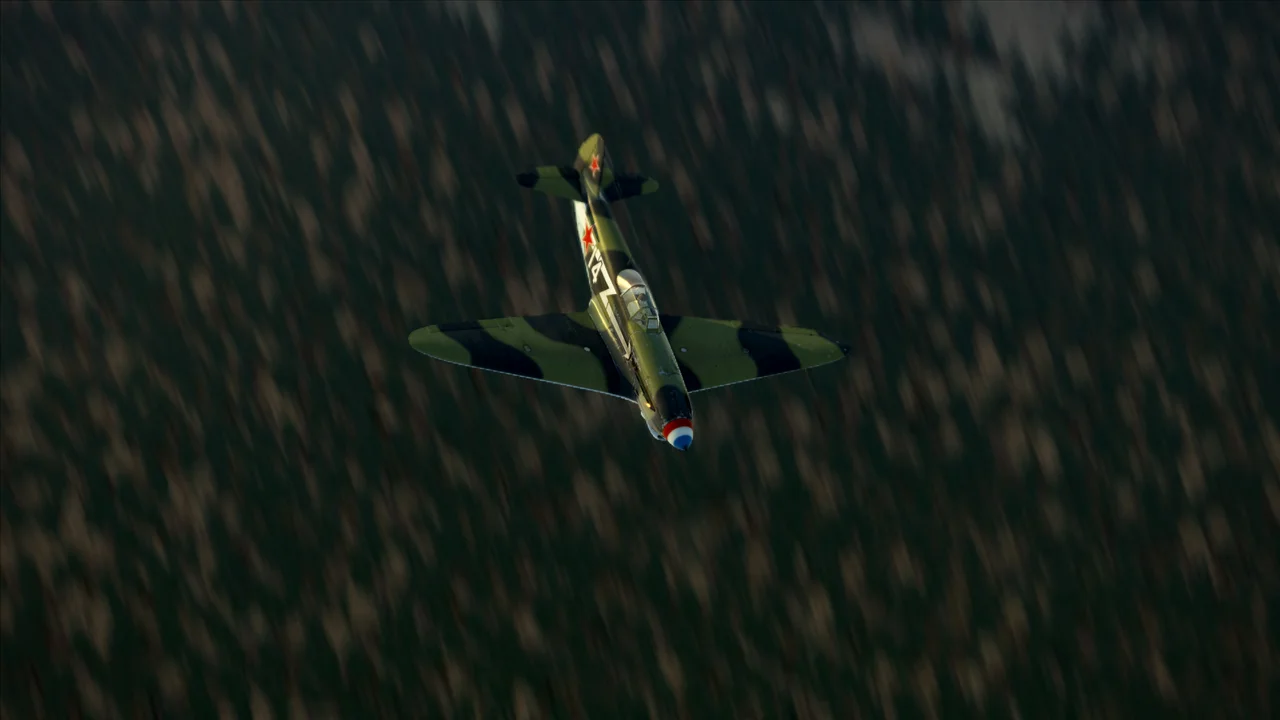
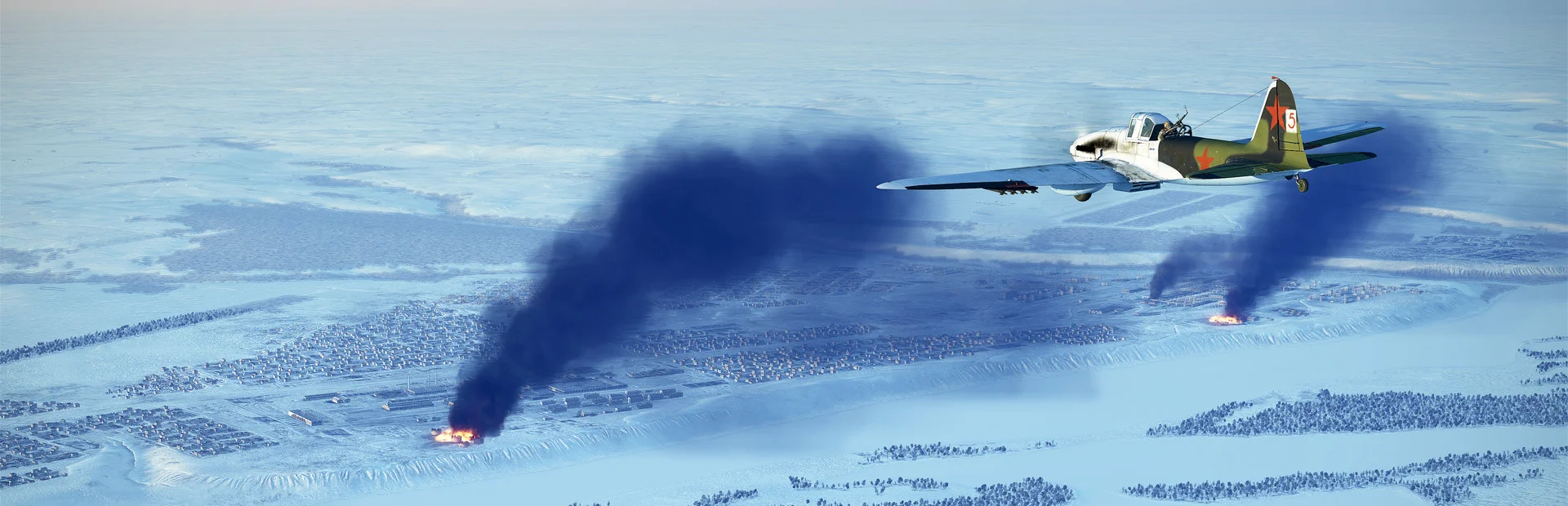
IL-2 Sturmovik: Yak-1b Collector Plane adds the Yak-1b, also known as the Yak-1 Series 127, to IL-2 Sturmovik: Battle of Stalingrad. The fighter incorporates improvements introduced in 1942, including increased armor protection, aerodynamic changes and upgraded armament. Its two 7.62 mm ShKAS guns were replaced by a 12.7 mm UBS machine gun, while a lowered dorsal spine and teardrop-style canopy improved the rear view.
The Yak-1b remained in production until mid-1944, when the Yak-3 replaced it. Soviet aces Arseniy Vorozheikin, Alexander Koldunov, Aleksey Alelyukhin and Sergey Lugansky flew the aircraft, as did the French volunteer Normandie Niemen squadron on the Eastern Front. Its combat debut was in April 1943. You can fly it in Quick Mission Builder and Multiplayer, and in Career mode during the Battle of Kuban timeframe.
Armament and modifications
The aircraft carries a 20 mm SsVAK gun with 140 rounds and a rate of fire of 800 rounds per minute, plus a 12.7 mm UB machine gun with 220 rounds and a rate of fire of 1,000 rounds per minute. Available modifications include:
- FAB-50sv bombs: two 50 kg general-purpose bombs. The racks and bombs add 120 kg and reduce speed by 23 kph; after release, the speed loss is 13 kph.
- FAB-100M bombs: two 104 kg general-purpose bombs. The racks and bombs add 228 kg and reduce speed by 31 kph; after release, the speed loss is 13 kph.
- Landing light: for night flights; adds 2 kg and causes a minor speed loss.
- RPK-10 radio compass: a fixed loop radio compass that adds 10 kg and causes a minor speed loss.
- Rearview mirror: adds 1 kg and reduces speed by 1 kph.
Paint schemes
The plane includes a standard paint scheme, default white winter camouflage, and the standard two-color Red Army Air Force camouflage used since July 1943. It also has these historical and experimental schemes:
- Marcel Lefevre, Normandie squadron, Summer 1943: standard scheme, tri-color spinner, white arrow and pilot insignia.
- Fotiy Morozov, Guards Senior Lieutenant, 1944: standard grey camouflage, red spinner and tail stripes, and snake symbol.
- 291th IAP aircraft with dedicatory inscription: winter camouflage with red spinner and arrow.
- Aircraft shared by Soviet 117th IAP and Yugoslavian 111th IAP, January–May 1945: grey upper surfaces, azurine underside and red spinner.
- 270th IAP aircraft, part of 203rd IAD, 2nd Ukrainian Front, November 1943: standard grey camouflage, red spinner and tail stripes.
- Sergey Danilovich Lugansky, 152nd IAP, 1944: standard grey camouflage, star on the spinner and white tail stripe.
- V.I. Pokrovsky, 2nd GvIAP, 1945: grey upper surfaces, azurine underside, red tail with victory stars, lightning on the broadsides and pilot insignia on the right broadside.
- Albert Durant, Normandie squadron, Khatenki, Summer 1943: standard scheme, white spinner, imitation scales on the nose and French badges on the broadsides.
- Hero of the Soviet Union Fyodor Vasilyevich Khimich, 127th IAP, Stalingrad area, November 1942: standard scheme, red-and-white spinner and victory stars on the left broadside.
- Experimental tricolor camouflage tested by the VVS research institute in 1943.
Flight and engine
The Yak-1b is powered by an M-105PF engine. Its listed nominal power ranges from 1,200 to 1,260 HP depending on altitude and engine RPM; nominal operation is available without a time limit. The two-stage mechanical supercharger requires manual gear changes at 2,300 m, and the mixture must be leaned above 3–4 km for optimal engine operation. Leaning the mixture also reduces fuel consumption. An automatic governor adjusts propeller pitch to maintain the RPM set by the governor control lever, while the water and oil radiator shutters are controlled manually.
The aircraft measures 8.5 m long, has a 10 m wingspan and 17.15 m² of wing area. Its empty weight is 2,322 kg, minimum weight is 2,543 kg, standard weight is 2,887 kg and maximum takeoff weight is 3,117 kg. It carries 304 kg (408 l) of fuel and has a useful load of 795 kg. Its service ceiling is 10,600 m. At standard aircraft mass, maximum true air speed is 530 kph at sea level and 2,550 RPM, 567 kph at 2,000 m and 2,700 RPM, and 600 kph at 4,500 m and 2,700 RPM. Climb rates at 2,700 RPM are 17.0 m/s at sea level, 15.0 m/s at 3,000 m and 9.5 m/s at 6,000 m.
Indicated stall speed in flight configuration is 153–169 kph, with a stall angle of attack of 18°. In landing configuration, stall speed is 132–145 kph and the stall angle is 15.6°. The dive speed limit is 720 kph and the maximum load factor is 10.3 G. Maximum-performance turns take 19.0 seconds at sea level and 24.1 seconds at 3,000 m, both at 270 kph IAS. At 3,000 m, flight endurance is 2.0 hours at 350 kph IAS. Takeoff speed is 160–190 kph, glideslope speed is 195–205 kph, and landing speed is 135–145 kph at a 12° landing angle. Performance ranges reflect possible aircraft masses; the listed maximum speeds, climb rates and turn times use standard mass. The data is for international standard atmosphere, and climb rates and turn times are given at nominal 2,700 RPM.
Flight controls
The airplane can be trimmed only in pitch. Its landing flaps use a pneumatic actuator and extend only fully, not gradually. Above 220 kph, airflow may push extended flaps upward; at high speed they may not extend fully, though they can extend a few more steps just before landing.
The rudder unlocks the tailwheel when pedal input exceeds 75% of its range; below that, the tailwheel stays locked. Large rudder inputs should therefore be avoided at high speed. The airplane has differential pneumatic wheel brakes controlled by a shared lever: while the brake lever is held, pressing the rudder pedal gradually releases the brake on the opposite wheel, making the plane swing to one side or the other.
Fuel gauges are fitted to the left and right wing tanks, outside the cockpit, and show the remaining fuel only when a tank contains less than 80 liters. The canopy has no emergency release, so you must slow below 550 kph to open it before bailing out. The wing-mounted bomb racks release both bombs together.
Frequently asked questions
The best price for IL-2 Sturmovik: Battle of Stalingrad IL-2 Sturmovik: Yak-1b Collector Plane is $19.99 at Steam. It is the only shop with an offer that activates in your country.
No. IL-2 Sturmovik: Battle of Stalingrad IL-2 Sturmovik: Yak-1b Collector Plane is DLC and only works with IL-2 Sturmovik: Battle of Stalingrad.
The minimum requirements for IL-2 Sturmovik: Battle of Stalingrad are: Windows 10, Intel Core i5, 16 GB RAM, 95 GB storage. It runs on Windows only. The recommended specs are in the System requirements section.
Yes. IL-2 Sturmovik: Battle of Stalingrad has multiplayer and a single-player mode. It supports online co-op and online PvP.
No. Valve rates IL-2 Sturmovik: Battle of Stalingrad as Unsupported on the Steam Deck.
Steam lets publishers create keys to sell in other shops. Once you activate a key, the game is yours to keep, just like a store purchase.
Disclaimer: CD keys have an inherent 1–2% average failure rate. Check the shop terms for buyer protection info. Steam offers no buyer protection for keys bought in other shops and doesn't refund them.
Similar games

X-Plane 11
$29.99
1 offer
Combat Wings: Battle of Britain
−88%$0.59
$4.9923 offers
Microsoft Flight Simulator X: Steam Edition
$24.99
2 offers
Project Wingman
−53%$11.72
$24.9915 offers
Ace Combat 7: Skies Unknown
−77%$13.48
$59.9923 offers
Squad 44
−82%$3.47
$19.9924 offers
VTOL VR
−75%$7.43
$29.9912 offers
Battlefield V
$8.67
10 offers
Scramble: Battle of Britain
−46%$15.99
$29.9919 offers

Bomber Crew
−90%$1.55
$15.9926 offers
IL-2 Sturmovik: Cliffs of Dover Blitz
−86%$1.33
$9.9917 offers
European Air War
$9.99
2 offers