

Buy IL-2 Sturmovik: Battle of Stalingrad IL-2 Sturmovik: Spitfire Mk.XIV Collector Plane PC key
Offers


Screenshots
1 / 9
IL-2 Sturmovik series
About IL-2 Sturmovik: Battle of Stalingrad IL-2 Sturmovik: Spitfire Mk.XIV Collector Plane
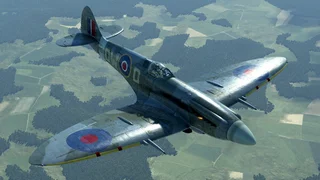
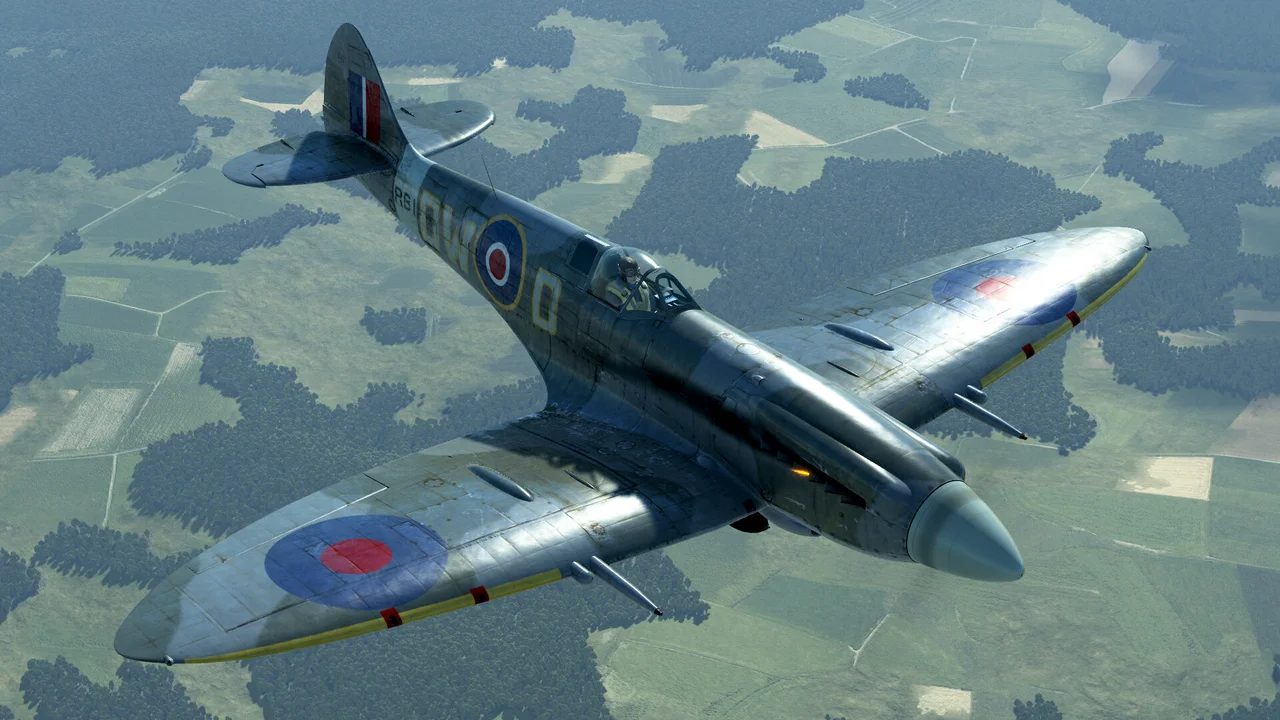
IL-2 Sturmovik: Spitfire Mk.XIV Collector Plane adds the Spitfire Mk. XIV to IL-2 Sturmovik. You can fly it in Quick Mission Builder, Advanced Quick Mission Generator and Multiplayer, as well as Career mode during the Battle of Normandy and Battle of Bodenplatte timeframes.
The Spitfire Mk. XIV
The Mk. XIV was the first Griffon-powered Spitfire to use the Griffon 65 inline engine, with a two-stage supercharger designed to improve high-altitude performance over earlier single-stage Griffon engines. The engine produces up to 2,050 horsepower, and the aircraft uses a five-bladed Rotol propeller. Production began in late 1943, with the first aircraft issued to No. 610 Squadron at the end of December that year. The model entered combat in January 1944 and became the 2nd Tactical Air Force’s main high-altitude air superiority fighter over northwestern Europe.
Mk. XIVs were used to hunt V-1 flying bombs and began deploying to southeastern Asia in June 1945, but did not see action against the Japanese. A total of 957 were built, and after World War II the aircraft was exported to countries including Belgium, India and Thailand.
Weapons and modifications
The aircraft has two wing configurations. The c-type wing carries two 20 mm Hispano Mk. II cannons, with 150 rounds per gun and a rate of fire of 650 rounds per minute, plus four 7.7 mm Browning .303 machine guns, with 350 rounds per gun and a rate of fire of 1,150 rounds per minute. The e-type wing replaces the four .303s with two 12.7 mm Browning .50 machine guns, each carrying 250 rounds and firing at 850 rounds per minute. During the summer of 1944, some aircraft had their machine guns removed and the firing ports faired over to improve performance while pursuing V-1s.
Bomb racks can carry two 250 lb general-purpose bombs or one 500 lb general-purpose bomb. In operational use, bomb-carrying was limited to one squadron from February 1945. Clipped wingtips, introduced in the winter of 1944–45, improve turning performance. Available modifications include:
- 150-grade fuel, allowing +21 lb boost; automatic supercharger gear shifting is disabled, and the stages must be switched manually at 11,000 ft. This gives an estimated 20 km/h speed increase at sea level.
- MkII Gyro Gunsight, adding 5.2 kg.
- Removal of the wing-mounted machine guns, reducing weight by 95 kg and increasing speed by 8 km/h.
- Clipped wings, reducing weight by 4 kg.
- E-type wing with two Browning .50 machine guns instead of four Browning .303s, adding 48 kg and increasing speed by 5 km/h.
- Two 250 lb G.P. bombs with racks, adding 250 kg and reducing speed by 22 km/h, or by 11 km/h after the bombs are dropped.
- One 500 lb G.P. bomb with rack, adding 237 kg and reducing speed by 12 km/h, or by 6 km/h after the bomb is dropped.
- Rear-view mirror, adding 1 kg and reducing speed by 1 km/h.
Skins
The aircraft includes standard paint and RAF markings with customizable tactical numbers, including markings for several periods of invasion stripes. Other available skins depict:
- Sqn Ldr R A Newbery, No 610 'County of Chester' Sqn, West Malling, Kent, England, June 1944. He destroyed eight V-1 missiles in his Spitfire 'DW D'.
- No 322 (Dutch) Sqn, Deanland, August 1944. The squadron claimed 108 V-1 missiles destroyed.
- "Brümhilde", flown by Flt Lt H. D. Johnson, No 91 Sqn, West Malling, Kent, Great Britain, July 1944. Eight V-1 missiles were brought down in this aircraft from 23 June; the squadron claimed 184 in total.
- Sqn Ldr W. G. Dodd, No 402 Sqn RCAF, Hawkinge, England, August 26th, 1944.
- Wg Cdr Colin Gray, Lympne Wing, Lympne, England, October 1944.
- Sqn Ldr John Shepherd, DFC, No 41 Squadron, Royal Air Force, April 1945. On April 14th, 1945, he shot down a Messerschmitt Bf 110 towing a Messerschmitt Me 163 rocket fighter, destroying both.
- Sqn Ldr J. H. 'Ginger' Lacey, No 17 Sqn, Autumn 1945.
- No 132 Sqn RAF, India, 1945.
- Belgian Air Force, Florennes Air Base, 1948.
- No 130 Sqn, late Summer 1944.
Flight characteristics
The aircraft measures 9.9 m in length, has an 11.21 m wingspan and a wing area of 22.48 m². Its empty weight is 3,295 kg, standard weight is 3,862.7 kg, and maximum useful load is 1,027.8 kg. Fuel capacity is 363.3 kg, or 504.6 litres (111 gallons).
Maximum true airspeed is 574 km/h at sea level, 671 km/h at 4,000 m and 720 km/h at 8,100 m, using 2,750 RPM and +18 boost. The service ceiling is 13,400 m. Climb rates are 23.8 m/s at sea level, 23.5 m/s at 2,650 m and 18.2 m/s at 6,750 m. Maximum-performance turn times are 18.1 seconds at sea level and 21 seconds at 3,000 m. Flight endurance at 3,000 m is 1 hour 45 minutes at 350 km/h IAS.
The indicated stall speed is 152–172 km/h in flight configuration and 145–163 km/h in takeoff or landing configuration. Takeoff speed is 170–195 km/h; glideslope speed is 180–210 km/h; and landing speed is 140–160 km/h. The dive speed limit is 756 km/h, maximum load factor is 12.5 G, and stall angle of attack is 19.0° in flight configuration or 16.2° in landing configuration. Flight-performance ranges reflect possible aircraft weights; maximum speeds, climb rates and turn times use standard weight. The listed performance figures use the international standard atmosphere, and climb rates and turn times use 2,750 RPM and +18 boost.
Engine and controls
The Griffon 65 produces 1,565 HP in takeoff mode at sea level, 1,520 HP in international power mode at 4,270 m in low gear, and 1,375 HP in international power mode at 8,070 m in high gear. In Emergency Max All Out mode, it produces 2,063 HP at 2,134 m in low gear and 1,845 HP at 6,400 m in high gear. Maximum cruising power is 2,400 RPM and +7 boost with unlimited duration; international power is 2,600 RPM and +9 boost for up to one hour; Emergency Max All Out is 2,750 RPM and +18 boost for up to five minutes.
The engine automatically governs manifold pressure when the throttle is at one-third or higher, controls fuel mixture and adjusts propeller pitch to maintain the selected RPM. Its two-stage mechanical supercharger shifts automatically, with manual switching to low gear available. Water and oil radiator shutters operate automatically, with a manual setting that forces them fully open. Rated water temperature at the engine outlet is 105–115°C, with a maximum of 135°C; rated oil temperature at the engine inlet is 90°C, with a maximum of 105°C.
The aircraft has neutral static stability and a highly effective elevator, so it needs careful control. Extended landing flaps make it unstable; the pneumatic flap actuator extends them only to their maximum position, and speed with the flaps extended is limited to 160 mph. Elevator and rudder trimmers are fitted. The tail wheel swivels freely and cannot be locked, while the landing gear wheels are close together, making accurate rudder-pedal control important during takeoff and landing. Differential pneumatic wheel brakes share a control lever: holding the brake lever while applying the rudder pedal gradually releases the brake on the opposite wheel, making the aircraft swing to one side or the other.
The aircraft has a warning siren for low throttle with the landing gear retracted. Strong airflow prevents the canopy from being opened or closed at high speed, and an emergency release allows it to be jettisoned for a bailout. Two underwing formation lights are fitted. The standard gunsight can be adjusted for target distance and target base. The optional gyroscopic gunsight calculates the required angular deflection when firing and has four modes: fixed reticle, fixed and gyro reticle, gyro reticle, and gyro reticle with the target range fixed at 150 yards for night use. Accurate deflection requires the target range to be set correctly by adjusting the target base and then matching the range-finding reticle to the target’s size. Both gunsights have sliding sun filters.
Frequently asked questions
The best price for IL-2 Sturmovik: Battle of Stalingrad IL-2 Sturmovik: Spitfire Mk.XIV Collector Plane is $19.99 at Steam. It is the only shop with an offer that activates in your country.
No. IL-2 Sturmovik: Battle of Stalingrad IL-2 Sturmovik: Spitfire Mk.XIV Collector Plane is DLC and only works with IL-2 Sturmovik: Battle of Stalingrad.
The minimum requirements for IL-2 Sturmovik: Battle of Stalingrad are: Windows 10, Intel Core i5, 16 GB RAM, 95 GB storage. It runs on Windows only. The recommended specs are in the System requirements section.
Yes. IL-2 Sturmovik: Battle of Stalingrad has multiplayer and a single-player mode. It supports online co-op and online PvP.
No. Valve rates IL-2 Sturmovik: Battle of Stalingrad as Unsupported on the Steam Deck.
Steam lets publishers create keys to sell in other shops. Once you activate a key, the game is yours to keep, just like a store purchase.
Disclaimer: CD keys have an inherent 1–2% average failure rate. Check the shop terms for buyer protection info. Steam offers no buyer protection for keys bought in other shops and doesn't refund them.
Similar games

X-Plane 11
$29.99
1 offer
Combat Wings: Battle of Britain
−88%$0.59
$4.9923 offers
Microsoft Flight Simulator X: Steam Edition
$24.99
2 offers
Project Wingman
−53%$11.72
$24.9915 offers
Ace Combat 7: Skies Unknown
−77%$13.48
$59.9923 offers
Squad 44
−82%$3.47
$19.9924 offers
VTOL VR
−75%$7.43
$29.9912 offers
Battlefield V
$8.67
10 offers
Scramble: Battle of Britain
−46%$15.99
$29.9919 offers

Bomber Crew
−90%$1.55
$15.9926 offers
IL-2 Sturmovik: Cliffs of Dover Blitz
−86%$1.33
$9.9917 offers
European Air War
$9.99
2 offers