

Buy IL-2 Sturmovik: Battle of Stalingrad IL-2 Sturmovik: Spitfire Mk.VB Collector Plane PC key
Offers


Screenshots
1 / 7
IL-2 Sturmovik series
About IL-2 Sturmovik: Battle of Stalingrad IL-2 Sturmovik: Spitfire Mk.VB Collector Plane
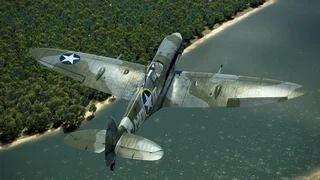
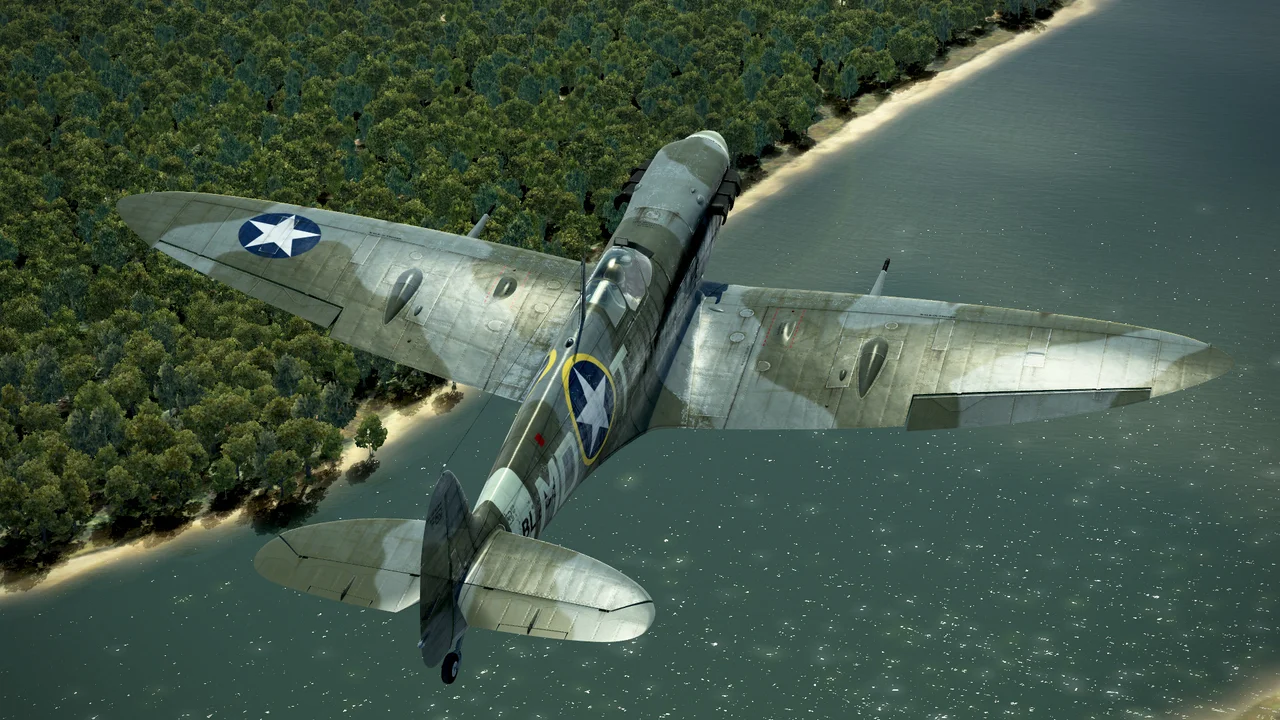
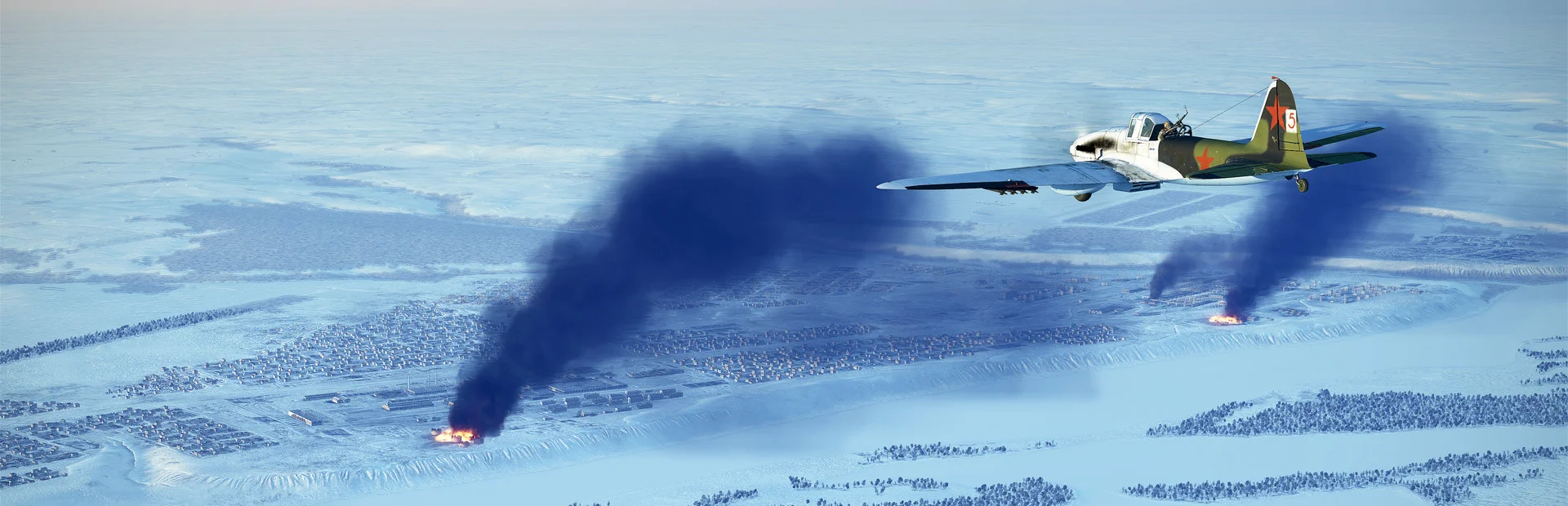
IL-2 Sturmovik: Spitfire Mk.VB Collector Plane adds the Supermarine Spitfire Mk.VB to IL-2 Sturmovik: Battle of Stalingrad. You can fly it in Quick Mission Builder and Multiplayer, as well as in Career mode during the Battle of Kuban timeframe.
The Spitfire Mk.VB
The Spitfire was used in Europe, Africa and the Pacific. The first Spitfires were upgraded from earlier Mk I and II models and entered service in early 1941. A total of 6,641 airframes were produced, and more than a hundred RAF squadrons used them; they were also supplied to British dominions and other Allied countries. The Mk.VB has a Merlin 45 or 46 engine, with the Merlin 46 better suited to higher altitudes. Of the 143 Mk.VBs supplied to the USSR, some saw action over Kuban in spring 1943.
The aircraft carries two 20 mm Hispano guns, each with 60 rounds and a rate of fire of 650 rounds per minute, and four 7.7 mm Browning .303 machine guns, each with 350 rounds and a rate of fire of 1,150 rounds per minute. It is 9.2 m long, has an 11.21 m wingspan and a wing area of 22.48 m². Its combat debut was in winter 1941.
Modifications and skins
The available modifications are a Merlin 45 engine, suited to lower altitudes, and a rearview mirror that adds 1 kg and causes a minor speed loss. The aircraft includes these skins:
- Standard pattern.
- Early Type A camouflage, with Dark Earth and Dark Green upper surfaces and a Sky underside, used until August 1941.
- Desert Scheme, with Dark Earth and Mid-Stone upper surfaces and an Azure Blue underside.
- Spitfire #EP210, number 538 of the 3rd Squadron of 57th GIAP, at Popovichevskaya airfield in April 1943.
- Spitfire #EN951 RF+D of No 303 (Kosciusko) Squadron, flown by Sqn Ldr Jan Zumbach at Kirton-in-Lindsey in September 1942.
- Spitfire #W3312 QJ+J “Moonraker,” flown by Sqn Ldr James Rankin of No 92 Sqn in August 1941.
- Spitfire #BL255 MD+T “Buckeye-Don,” flown by 1st Lt Dominic “Don” Gentile of 336th FS, 4th FG, 8th AF.
- Spitfire #BM324 GW+S of No 340 Sqn “Ile-de-France” (Free-French), flown by Cpt Bernard Dupérier in August 1942.
- Spitfire #BL287 XR+C, flown by Pilot Officer Leo Nomis of No 71 Eagle Squadron at Martlesham Heath, Suffolk, England, in April 1942.
- Spitfire #AB910 AE+H of No 402 (Canadian) Squadron at Horne in early June 1944.
- Spitfire JU+E of 111 Sq, flown by Sqn Ldr G.F. Brotchie at Debden, Essex, in March 1942.
Flight characteristics
The aircraft has neutral static stability and a highly effective elevator, so it needs careful control without excessive stick input. Extended landing flaps make it unstable. The flaps use a pneumatic actuator and extend only to their maximum position; speed with them extended is limited to 150 mph. The aircraft has elevator and rudder trimmers, a freely rotating tail wheel without a lock, and differential pneumatic wheel brakes operated by a shared lever. With the brake lever held, moving a rudder pedal gradually releases the brake on the opposite wheel, turning the aircraft.
The water radiator is operated manually, while the oil radiator cannot be adjusted. The single-stage mechanical supercharger needs no manual control. Automatic governors regulate manifold pressure and propeller RPM, and automatic mixture control maintains an optimal mixture when the mixture lever is forward. Moving it backward enables automatic mixture leaning to reduce fuel consumption. The manifold-pressure governor works when the throttle is at one-third position or above and must be switched off to set boost to +16.
The canopy cannot be opened or closed at high speed because of airflow, but it has an emergency release for bailouts. The aircraft has upper and lower formation lights that can be operated together or separately, and an adjustable gunsight with settings for target distance and target base, plus a sliding sun filter.
Performance and specifications
The aircraft’s indicated stall speed is 137–144 km/h in flight configuration and 129–135 km/h in takeoff or landing configuration. Its dive speed limit is 725 km/h, maximum load factor is 12.5 G, and stall angle of attack is 18.8° in flight configuration and 16.0° in landing configuration. Takeoff speed is 160–170 km/h, glideslope speed 145–160 km/h and landing speed 130–135 km/h, with a landing angle of 12.5°.
The Merlin 46 has a service ceiling of 12,000 m. Its maximum true air speeds are 457 km/h at sea level and 597 km/h at 7,400 m with 3,000 RPM and +9 boost, and 515 km/h at sea level and 604 km/h at 5,000 m with 3,000 RPM and +16 boost. Climb rates are 12.9 m/s at sea level, 13.1 m/s at 3,000 m and 12.0 m/s at 6,000 m. Maximum-performance turns take 25 seconds at sea level at 270 km/h IAS and 30 seconds at 3,000 m at 260 km/h IAS.
The Merlin 45 has a service ceiling of 11,200 m. Its maximum true air speeds are 480 km/h at sea level and 590 km/h at 6,000 m with 3,000 RPM and +9 boost, and 535 km/h at sea level and 596 km/h at 3,500 m with 3,000 RPM and +16 boost. Climb rates are 14.5 m/s at sea level, 14.7 m/s at 3,000 m and 11.4 m/s at 6,000 m. Maximum-performance turns take 22 seconds at sea level at 270 km/h IAS and 28.2 seconds at 3,000 m at 260 km/h IAS. At 3,000 m, flight endurance is 1 hour 45 minutes at 350 km/h IAS.
The Merlin 46 produces 1,100 HP in Take-off mode at sea level (3,000 RPM, +12 boost), 1,400 HP in Emergency Max All Out mode at 14,000 feet (3,000 RPM, +16 boost), and 1,115 HP in International power mode at 19,000 feet (2,850 RPM, +9 boost). The Merlin 45 produces 1,185 HP in Take-off mode at sea level, 1,455 HP in Emergency Max All Out mode at 9,000 feet, and 1,170 HP in International power mode at 14,200 feet, using the same RPM and boost settings for each mode.
Maximum Cruising power is unlimited at 2,650 RPM and +7 boost. International power can be used for up to 30 minutes at 2,850 RPM and +9 boost; Emergency Max All Out power can be used for up to 5 minutes at 3,000 RPM and +16 boost. Rated water temperature at the engine outlet is 105–115°C, with a maximum of 125°C. Rated oil temperature at the engine inlet is 70–85°C, with a maximum of 105°C. The supercharger has a single gear.
The empty weight is 2,415 kg, minimum weight with no ammunition and 10% fuel is 2,732 kg, and standard weight is 2,979 kg. Fuel load is 274 kg (386 l or 85 gallons), and useful load is 564 kg. Performance figures use the international standard atmosphere. Flight-performance ranges account for possible aircraft mass ranges; maximum speeds, climb rates and turn times use standard aircraft mass. Climb rates are given at 2,850 RPM and +9 boost, and turn times at 3,000 RPM and +9 boost.
Frequently asked questions
The best price for IL-2 Sturmovik: Battle of Stalingrad IL-2 Sturmovik: Spitfire Mk.VB Collector Plane is $19.99 at Steam. It is the only shop with an offer that activates in your country.
No. IL-2 Sturmovik: Battle of Stalingrad IL-2 Sturmovik: Spitfire Mk.VB Collector Plane is DLC and only works with IL-2 Sturmovik: Battle of Stalingrad.
The minimum requirements for IL-2 Sturmovik: Battle of Stalingrad are: Windows 10, Intel Core i5, 16 GB RAM, 95 GB storage. It runs on Windows only. The recommended specs are in the System requirements section.
Yes. IL-2 Sturmovik: Battle of Stalingrad has multiplayer and a single-player mode. It supports online co-op and online PvP.
No. Valve rates IL-2 Sturmovik: Battle of Stalingrad as Unsupported on the Steam Deck.
Steam lets publishers create keys to sell in other shops. Once you activate a key, the game is yours to keep, just like a store purchase.
Disclaimer: CD keys have an inherent 1–2% average failure rate. Check the shop terms for buyer protection info. Steam offers no buyer protection for keys bought in other shops and doesn't refund them.
Similar games

X-Plane 11
$29.99
1 offer
Combat Wings: Battle of Britain
−88%$0.59
$4.9923 offers
Microsoft Flight Simulator X: Steam Edition
$24.99
2 offers
Project Wingman
−53%$11.72
$24.9915 offers
Ace Combat 7: Skies Unknown
−77%$13.48
$59.9923 offers
Squad 44
−82%$3.47
$19.9924 offers
VTOL VR
−75%$7.43
$29.9912 offers
Battlefield V
$8.67
10 offers
Scramble: Battle of Britain
−46%$15.99
$29.9919 offers
Bomber Crew
−90%$1.55
$15.9926 offers
IL-2 Sturmovik: Cliffs of Dover Blitz
−86%$1.33
$9.9917 offers
European Air War
$9.99
2 offers