

Buy IL-2 Sturmovik: Battle of Stalingrad IL-2 Sturmovik: La-5F series 38 Collector Plane PC key
Offers


Trailers & screenshots
1 / 8
IL-2 Sturmovik series
About IL-2 Sturmovik: Battle of Stalingrad IL-2 Sturmovik: La-5F series 38 Collector Plane
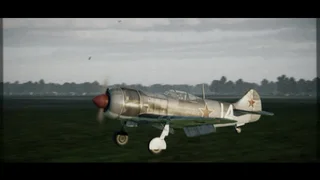
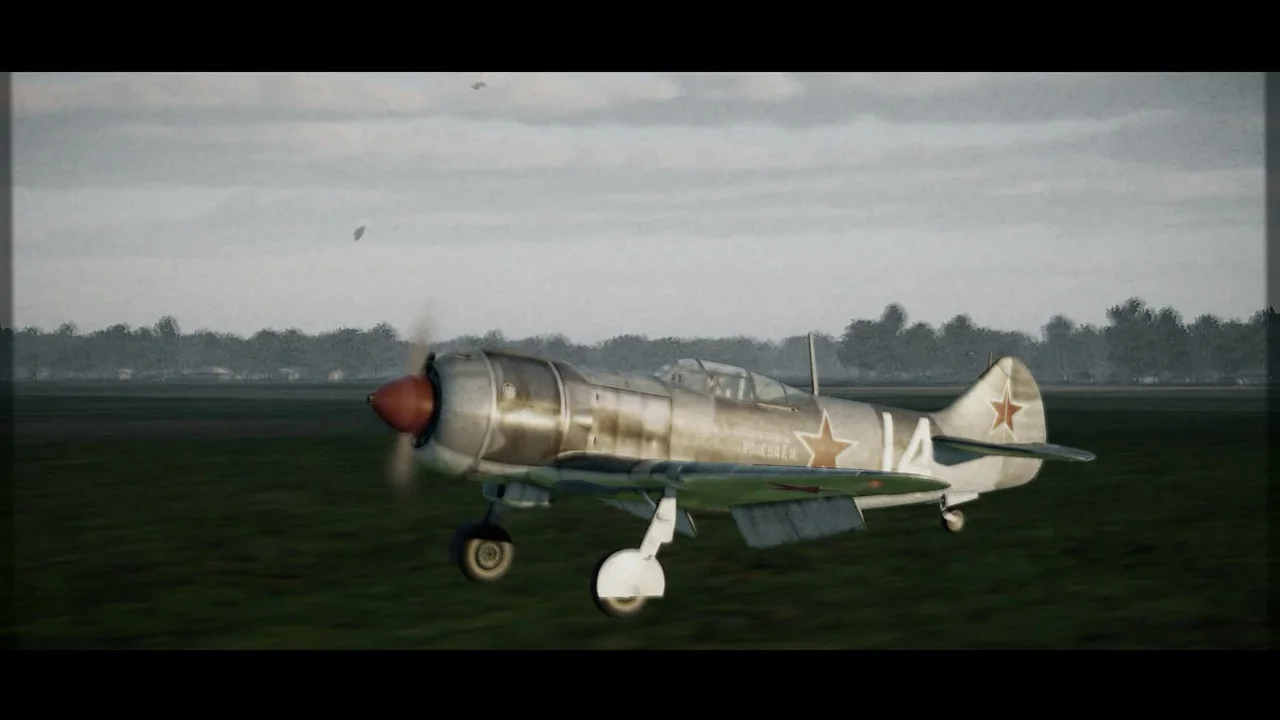
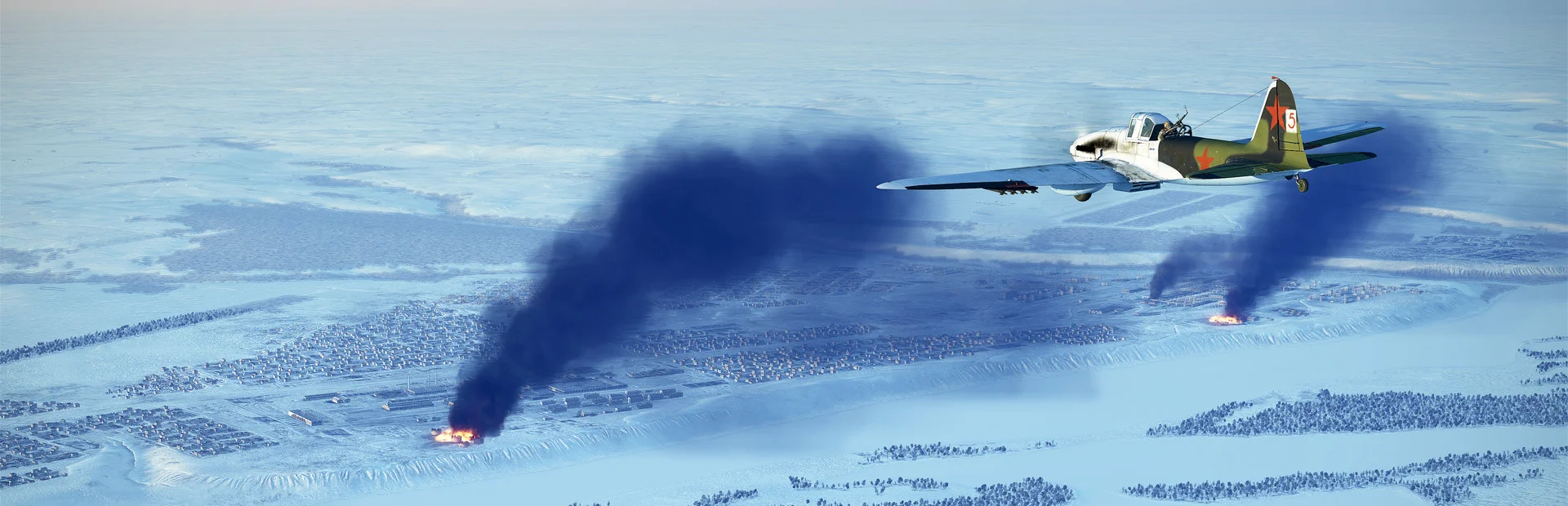
IL-2 Sturmovik: La-5F series 38 Collector Plane adds a 1943 La-5F fighter to IL-2 Sturmovik: Battle of Stalingrad. The La-5F was an intermediate development between the La-5 and La-5FN, produced through 1943 while FN engines remained in short supply. Its M-82F engine and lower weight make it more dynamic than an early La-5; it is more agile and turns slightly better than the FN, but is slower than the FN in level flight and climb.
Aircraft and performance
The La-5F has a bubble-top canopy with emergency jettison, improving the pilot’s field of view and allowing a quick exit from a burning aircraft. Its elevator is slightly larger, while its horizontal stabilizer surface is smaller. It carries three fuel tanks instead of the FN’s five, holding 465 litres rather than 539 litres, and has a cockpit modeled to current standards.
Its standard forward armament is two synchronized, nose-mounted 20 mm ShVAK guns with 170 rounds each, firing at 800 rounds per minute. The aircraft can also carry two FAB-50sv 50 kg general-purpose bombs or two FAB-100M 104 kg general-purpose bombs. Its listed dimensions are 8.672 m in length, a 9.8 m wingspan and 17.51 m² of wing area.
The listed flight characteristics include a service ceiling of 10,000 m, a dive speed limit of 720 km/h and a maximum load factor of 10 G. At nominal power, maximum true airspeed is 552 km/h at sea level, 580 km/h at 3,000 m and 597 km/h at 6,000 m. Climb rates at those altitudes are 19.5, 14.4 and 9.5 m/s respectively. Maximum performance turns take 20.8 seconds at sea level and 29 seconds at 3,000 m; flight endurance at 3,000 m is 1.7 hours at 350 km/h IAS. The listed stall speeds are 165–183 km/h in flight configuration and 147–162 km/h in takeoff and landing configuration. Takeoff speed is 170–200 km/h, glideslope speed is 200–210 km/h, and landing speed is 150–160 km/h. These figures use international standard atmosphere; performance ranges reflect possible aircraft masses, and maximum speeds, climb rates and turn times use standard mass and nominal power.
Loadouts and controls
Available options include custom ammunition containing only AP or only HE rounds instead of a mix, a rear-view mirror, a landing light for night flights and an RPK-10 fixed-loop radio compass for navigation using radio beacons. The two-bomb loadouts affect speed: FAB-50sv bombs add 120 kg with racks and reduce speed by 20 km/h before release and 12 km/h afterward; FAB-100M bombs add 228 kg with racks and reduce speed by 27 km/h before release and 12 km/h afterward. The mirror adds 1 kg, the landing light 2 kg and the radio compass 10 kg.
The M-82 engine has a two-stage mechanical supercharger that you switch manually at 3,500 m. Its boost control limits pressure to 950 mm Hg in normal mode and 1,140 mm Hg in boost mode. The engine’s automatic governor adjusts propeller pitch to maintain the RPM selected with the governor lever, while mixture control is automatic at maximum and can be leaned manually to reduce fuel consumption. The oil radiator and air-cooling intake and outlet shutters are manually controlled; the intake shutters should generally remain open, closing only when the engine risks overcooling, such as during a dive at idle throttle.
The aircraft has pitch and yaw trimmers, automatic wing slats that deploy at high angles of attack to soften the approach to a stall, and hydraulically actuated landing flaps that extend to any angle up to 60°. Its tail wheel rotates freely without a lock, so takeoff and landing require accurate rudder-pedal control. Differential pneumatic wheel brakes share a control lever: holding the brake lever while applying the rudder gradually releases the opposite wheel brake and turns the aircraft. A fuel gauge shows total remaining fuel. The bomb-rack controls release both bombs together.
Missions and paint schemes
You can fly the aircraft in Quick Mission Builder, Advanced Quick Mission Generator and Multiplayer. In Career mode, it is available during Battle of Kuban, where the 32nd GIAP received the aircraft on July 5, 1943. Its combat debut was in summer 1943.
The aircraft includes an early green-and-black upper and light-blue lower camouflage pattern used until August 1943, with customizable tactical numbers, plus these named paint schemes:
- Alexey Maresyev: 63rd GIAP, Kursk Salient, 1943. After being shot down in a Yak-1 and badly injured in April 1942, he made an 18-day journey back to Soviet-controlled territory. Gangrene and blood poisoning led to the amputation of both legs above the knee, but he mastered prosthetic devices and returned to flying in June 1943. He became a Hero of the Soviet Union in August after shooting down three Fw 190, and died in 2001, an hour before his 85th birthday celebration.
- Ivan Sytov: 5th GIAP, South-Western Front, autumn 1943. The 25 stars mark his total victories. He was shot down and killed in a dogfight on September 8, 1943.
- Moisey Tokarev: 40th GIAP commander, summer 1943. He was shot down and killed on July 8, 1943.
- Petr Belyasnik: 126th IAP, autumn 1943. He sponsored the aircraft’s construction with his personal savings.
- Grigory Onufrienko: 31st IAP commander, 3rd Ukrainian Front, spring 1944. The aircraft was built with money raised by liberated Kolkhoz workers of the Ukrainian SSR.
- Leonid Galchenko: 609th IAP, 1943–1945. The aircraft took part in the Victory Parade in Moscow in June 1945.
- Jolly Fellows: one of two La-5Fs sponsored in 1944 by the state jazz orchestra of the same name.
- Vitaly Popkov: 5th GIAP, 1944, and a twice-decorated Hero of the Soviet Union. This is the second La-5F sponsored by the state jazz orchestra Jolly Fellows.
- Ivan Haustov: 21st IAP, Baltic Front, 1944. He did not return from a combat sortie on March 6, 1945.
- Ivan Kozhedub: 240th IAP, 1944, and a thrice-decorated Hero of the Soviet Union. An inscription on the fuselage’s right side says the aircraft was built with money donated by Kolkhoz worker Vasily Konev.
- Nikolay Kuznetsov: 760th IAP, Karelian Front, 1944.
Aircraft specifications
The aircraft’s listed weights are 2,584 kg empty, 2,844 kg at minimum weight with no ammunition and 10% fuel, 3,220 kg at standard weight, and 3,460 kg at maximum takeoff weight. Its fuel load is 334 kg, or 464 litres, and its useful load is 876 kg. The M-82 engine produces 1,700 HP in boosted mode at sea level, and nominal power of 1,400 HP at sea level, 1,550 HP at 2,100 m and 1,335 HP at 5,400 m. Nominal engine operation is unlimited at 2,400 RPM and 1,140 mm Hg. The listed oil temperature range is 55–90 °C, with a maximum of 125 °C; cylinder-head temperature is rated at 140–210 °C, with a maximum of 250 °C.
Frequently asked questions
The best price for IL-2 Sturmovik: Battle of Stalingrad IL-2 Sturmovik: La-5F series 38 Collector Plane is $19.99 at Steam. It is the only shop with an offer that activates in your country.
No. IL-2 Sturmovik: Battle of Stalingrad IL-2 Sturmovik: La-5F series 38 Collector Plane is DLC and only works with IL-2 Sturmovik: Battle of Stalingrad.
The minimum requirements for IL-2 Sturmovik: Battle of Stalingrad are: Windows 10, Intel Core i5, 16 GB RAM, 95 GB storage. It runs on Windows only. The recommended specs are in the System requirements section.
Yes. IL-2 Sturmovik: Battle of Stalingrad has multiplayer and a single-player mode. It supports online co-op and online PvP.
No. Valve rates IL-2 Sturmovik: Battle of Stalingrad as Unsupported on the Steam Deck.
Steam lets publishers create keys to sell in other shops. Once you activate a key, the game is yours to keep, just like a store purchase.
Disclaimer: CD keys have an inherent 1–2% average failure rate. Check the shop terms for buyer protection info. Steam offers no buyer protection for keys bought in other shops and doesn't refund them.
Similar games

X-Plane 11
$29.99
1 offer
Combat Wings: Battle of Britain
−88%$0.59
$4.9923 offers
Microsoft Flight Simulator X: Steam Edition
$24.99
2 offers
Project Wingman
−53%$11.72
$24.9915 offers
Ace Combat 7: Skies Unknown
−77%$13.48
$59.9923 offers
Squad 44
−82%$3.47
$19.9924 offers
VTOL VR
−75%$7.43
$29.9912 offers
Battlefield V
$8.67
10 offers
Scramble: Battle of Britain
−46%$15.99
$29.9919 offers
Bomber Crew
−90%$1.55
$15.9926 offers
IL-2 Sturmovik: Cliffs of Dover Blitz
−86%$1.33
$9.9917 offers
European Air War
$9.99
2 offers