

Buy IL-2 Sturmovik: Battle of Stalingrad IL-2 Sturmovik: Ju 52/Зm Collector Plane PC key
Offers


Screenshots
1 / 14
IL-2 Sturmovik series
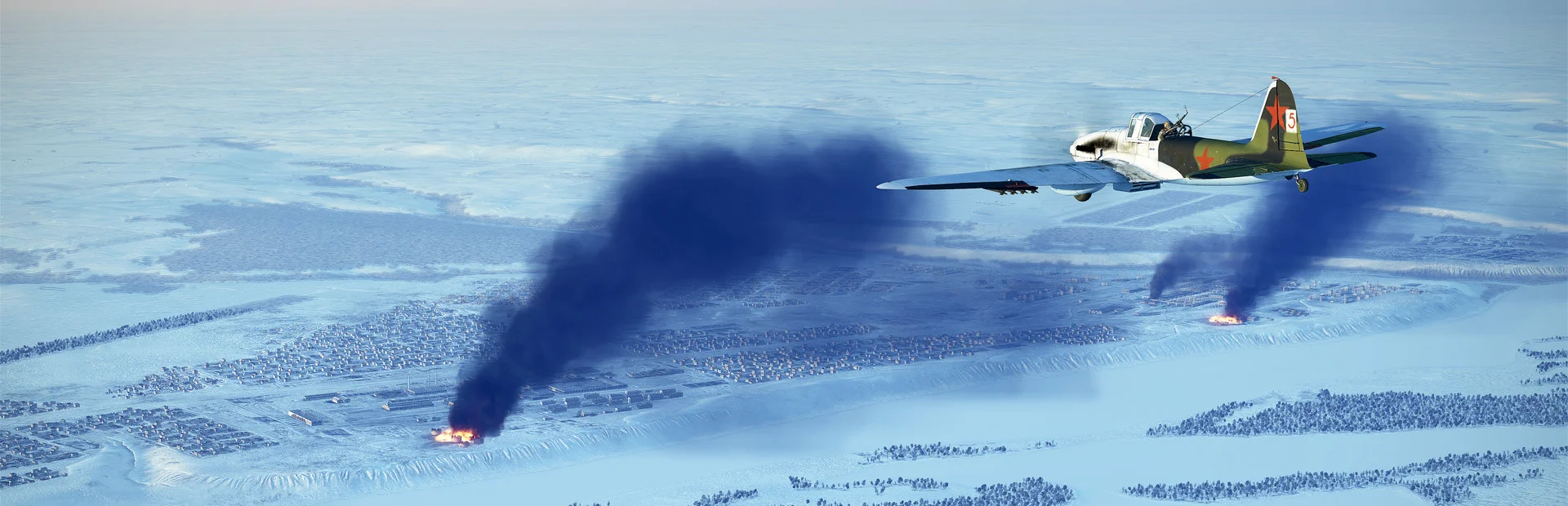
About IL-2 Sturmovik: Battle of Stalingrad IL-2 Sturmovik: Ju 52/Зm Collector Plane
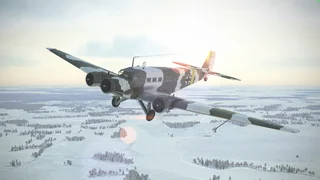
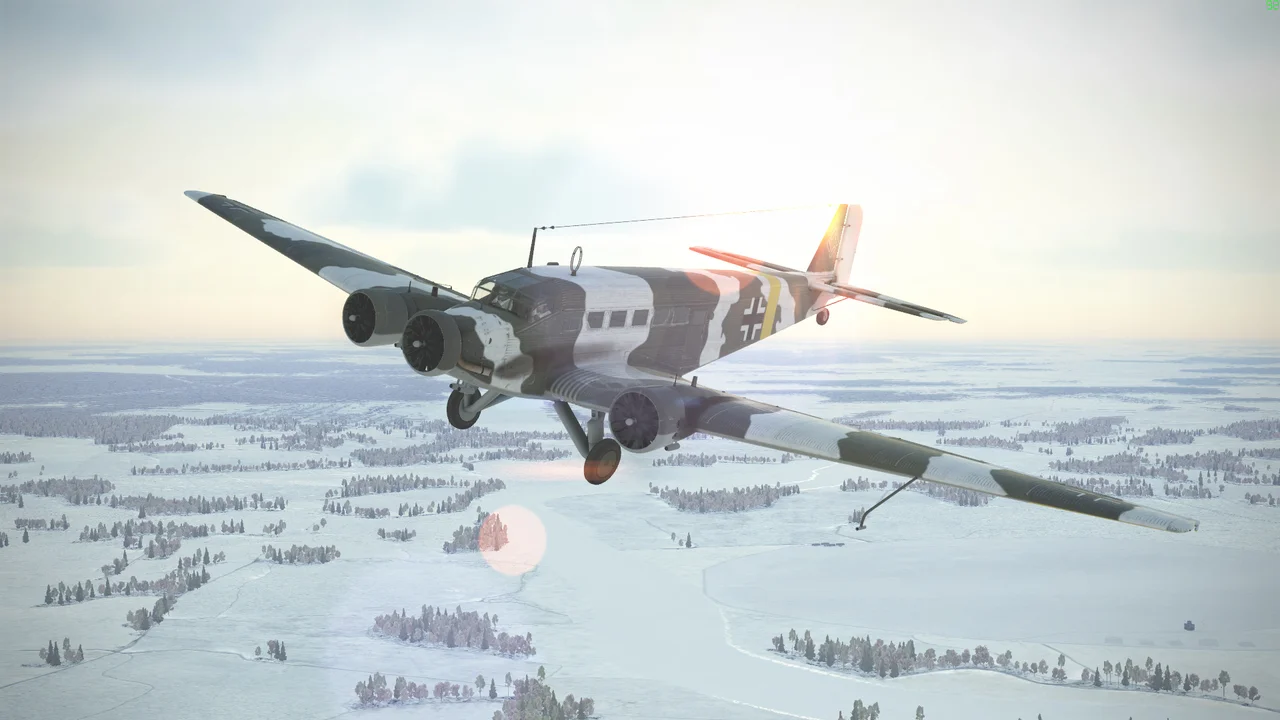
IL-2 Sturmovik: Ju 52/3m Collector Plane adds the Ju 52/3m transport aircraft to IL-2 Sturmovik: Battle of Stalingrad. Designed as a civilian passenger plane in the 1930s, it served widely throughout the war and became a symbol of Luftwaffe transport operations. It began military service as a bomber in the Spanish Civil War and took part in operations including the airborne assault on Crete, supplying the Afrika Corps, evacuating wounded from the Kuban front, and rescuing German forces trapped in the Demyansk and Stalingrad pockets. Although considered obsolete for much of the war, it was dependable and sturdy, and many countries continued using it after the war.
Cargo and career
You can carry cargo, drop cargo containers and deploy Fallschirmjäger troops. The aircraft is available in Quick Mission Builder and Multiplayer, and in Career mode during any timeframe in Battle of Moscow, Battle of Stalingrad and Battle of Kuban.
Its modifications include a military cargo payload, ten MAB 250 transport containers weighing 250 kg each and fitted with parachutes, or twelve paratroopers with ammunition. A rear turret with an MG 15 can also be fitted. The optional defensive armament is a 7.92 mm MG 15 with 1,125 rounds and a rate of fire of 1,000 rounds per minute.
Aircraft skins
The aircraft includes these paint schemes and historical markings:
- Standard pattern, including a winter camouflage version.
- Sandy yellow over standard camouflage (4U+NH), used during Operation Mercury on Crete in May 1941.
- Legion Condor markings (22+99), for a first-squadron, group 2-G-22 aircraft in Seville in early 1937, with early tri-color camouflage.
- Standard two-color camouflage (NO+HJ), an ambulance aircraft on the Eastern Front.
- Manfred von Richthofen, also known as the Red Baron, commemorative markings on W.Nr. 4022 (D-2527), a 1935 Lufthansa aircraft.
- Standard camouflage with a serpent on the broadside (3U+MT), from 9./ZG 26 in France in 1940.
- White waves painted over standard camouflage, for the Eastern Front.
- Temporary winter camouflage over standard two-color camouflage (BJ+YD), an ambulance aircraft on the Eastern Front in winter 1942–1943.
- Early RLM 62/63/71 tri-color camouflage, for aircraft 1Z+BF of the 11th squadron, IV./KGzbV 1 group, in the Balkans in 1941.
- “Immelmann II” (D-2600), Adolf Hitler’s personal aircraft from the “Fuhrer squadron.”
Flight characteristics
The Ju 52/3m is 18.9 m long, has a wingspan of 29.25 m and a wing area of 111.5 m². Its BMW-132a engine has a maximum take-off power of 640 HP at sea level and 660 HP at 900 m; climb power is 575 HP at sea level and 590 HP at 900 m. The engine has a single-stage mechanical supercharger that requires no manual control, while mixture control is manual. Above 1 km, leaning the mixture is necessary for optimal engine operation and can also reduce fuel consumption.
The aircraft has three fixed-pitch propellers, so you control thrust with the engine throttles. The throttle range from idle at 25% to maximum power at 100% controls engine power; the 0–20% range is used to brake the landing gear wheels. Engine modes can only be identified by watching the RPM gauges. The engine modes are nominal at 1,925 RPM for unlimited time, climb at 1,975 RPM for up to 30 minutes and take-off at 2,050 RPM for up to five minutes. Radiator bypass and engine cowls are controlled manually, and the cabin pedals have an adjustable load-feel mechanism to reduce pilot workload.
The horizontal stabilizer is manually controlled and can also trim the flight stick. It should be set to 0° before take-off, +2° in flight and −1.5° for landing. The mechanical flap system can be linked to or unlinked from the stabilizer using the flap controls. To configure the flaps, set the stabilizer to +2°, engage the link, then move it to 0° for take-off, extending the flaps to 25°. Once airborne, return the stabilizer to +2° so the flaps retract fully, then unlink the controls. Before landing, set the stabilizer to +2°, engage the link and move it to −1.5° to extend the flaps fully to 40°. Deviating from this procedure can make the linked system inoperable, leaving it unable to control either the stabilizer or the flaps.
The tail wheel rotates freely and has no lock, so take-offs and landings require confident, precise rudder-pedal control. Separate pneumatic brakes operate on each wheel: set the corresponding left or right engine throttle to 20% or less to brake that wheel, or set the central engine throttle to that range to brake both. Lower throttle settings provide greater braking, and the brake buttons can also move the left and right engine throttles into the braking position. A hydraulic system provides the tail-wheel parking brake.
Specifications and operation
- Defensive armament: optional 7.92 mm MG 15, with 1,125 rounds and a rate of fire of 1,000 rounds per minute.
- Empty weight: 6,305 kg; minimum weight with no ammunition and 10% fuel: 7,017 kg; standard weight: 10,003 kg; maximum take-off weight: 11,333 kg.
- Fuel load: 1,824 kg / 2,400 l; useful load: 5,028 kg.
- Combat debut: 1936.
- Indicated stall speed: 105–117 km/h in flight configuration and 92–109 km/h in take-off or landing configuration.
- Dive speed limit: 330 km/h; maximum load factor: 4.0 G.
- Stall angle of attack: 20° in flight configuration and 17.2° in landing configuration.
- Maximum true air speed in climb mode: 260 km/h at sea level, 258 km/h at 3,000 m and 241 km/h at 6,000 m.
- Service ceiling: 6,800 m; climb rate in climb mode: 6.9 m/s at sea level, 4.2 m/s at 3,000 m and 1.4 m/s at 6,000 m.
- Maximum-performance turn time in take-off mode: 24.0 seconds at sea level and 35.4 seconds at 3,000 m, both at 165 km/h IAS.
- Flight endurance at 3,000 m: 5.3 hours at 205 km/h IAS.
- Take-off speed: 100–120 km/h; glideslope speed: 140–155 km/h; landing speed: 95–110 km/h; landing angle: 11.7°.
- Oil rated and maximum temperatures at the engine intake: 60°C and 80°C; at the engine output: 80°C and 100°C.
The aircraft also has mechanical fuel-float gauges for the left and right fuel-tank groups, mounted on the engine nacelles outside the cabin, and three mechanical oil-float gauges, one on each engine nacelle. Cargo doors can be opened only on the ground. To drop paratroopers or cargo containers, remove the left passenger door before flight; they are released using the bomb-drop control.
Frequently asked questions
The best price for IL-2 Sturmovik: Battle of Stalingrad IL-2 Sturmovik: Ju 52/Зm Collector Plane is $24.99 at Steam. It is the only shop with an offer that activates in your country.
No. IL-2 Sturmovik: Battle of Stalingrad IL-2 Sturmovik: Ju 52/Зm Collector Plane is DLC and only works with IL-2 Sturmovik: Battle of Stalingrad.
The minimum requirements for IL-2 Sturmovik: Battle of Stalingrad are: Windows 10, Intel Core i5, 16 GB RAM, 95 GB storage. It runs on Windows only. The recommended specs are in the System requirements section.
Yes. IL-2 Sturmovik: Battle of Stalingrad has multiplayer and a single-player mode. It supports online co-op and online PvP.
No. Valve rates IL-2 Sturmovik: Battle of Stalingrad as Unsupported on the Steam Deck.
Steam lets publishers create keys to sell in other shops. Once you activate a key, the game is yours to keep, just like a store purchase.
Disclaimer: CD keys have an inherent 1–2% average failure rate. Check the shop terms for buyer protection info. Steam offers no buyer protection for keys bought in other shops and doesn't refund them.
Similar games

X-Plane 11
$29.99
1 offer
Combat Wings: Battle of Britain
−88%$0.59
$4.9923 offers

Microsoft Flight Simulator X: Steam Edition
$24.99
2 offers
Project Wingman
−53%$11.72
$24.9915 offers

Ace Combat 7: Skies Unknown
−77%$13.48
$59.9923 offers
Squad 44
−82%$3.47
$19.9924 offers
VTOL VR
−75%$7.43
$29.9912 offers

Battlefield V
$8.67
10 offers
Scramble: Battle of Britain
−46%$15.99
$29.9919 offers

Bomber Crew
−90%$1.55
$15.9926 offers
IL-2 Sturmovik: Cliffs of Dover Blitz
−86%$1.33
$9.9917 offers
European Air War
$9.99
2 offers