

Buy IL-2 Sturmovik: Battle of Stalingrad IL-2 Sturmovik: I.A.R. 80-A and 80-B Collector Planes PC key
Offers


Trailers & screenshots
1 / 12
IL-2 Sturmovik series
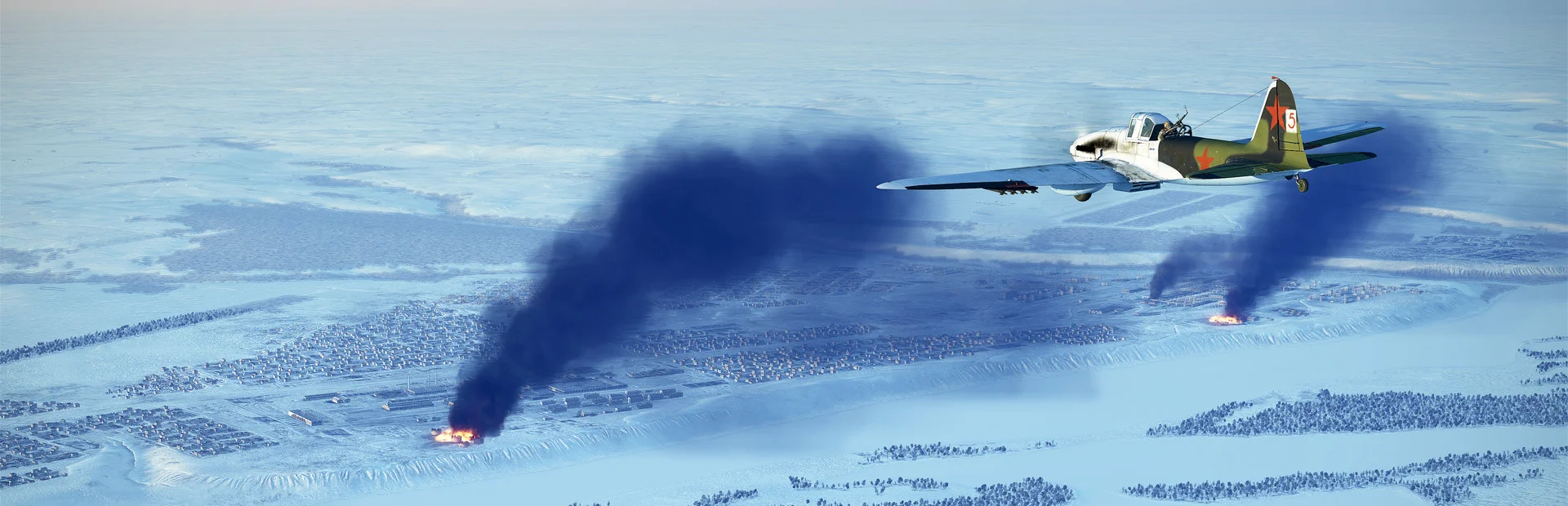
About IL-2 Sturmovik: Battle of Stalingrad IL-2 Sturmovik: I.A.R. 80-A and 80-B Collector Planes
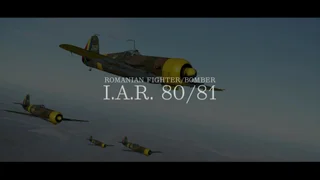
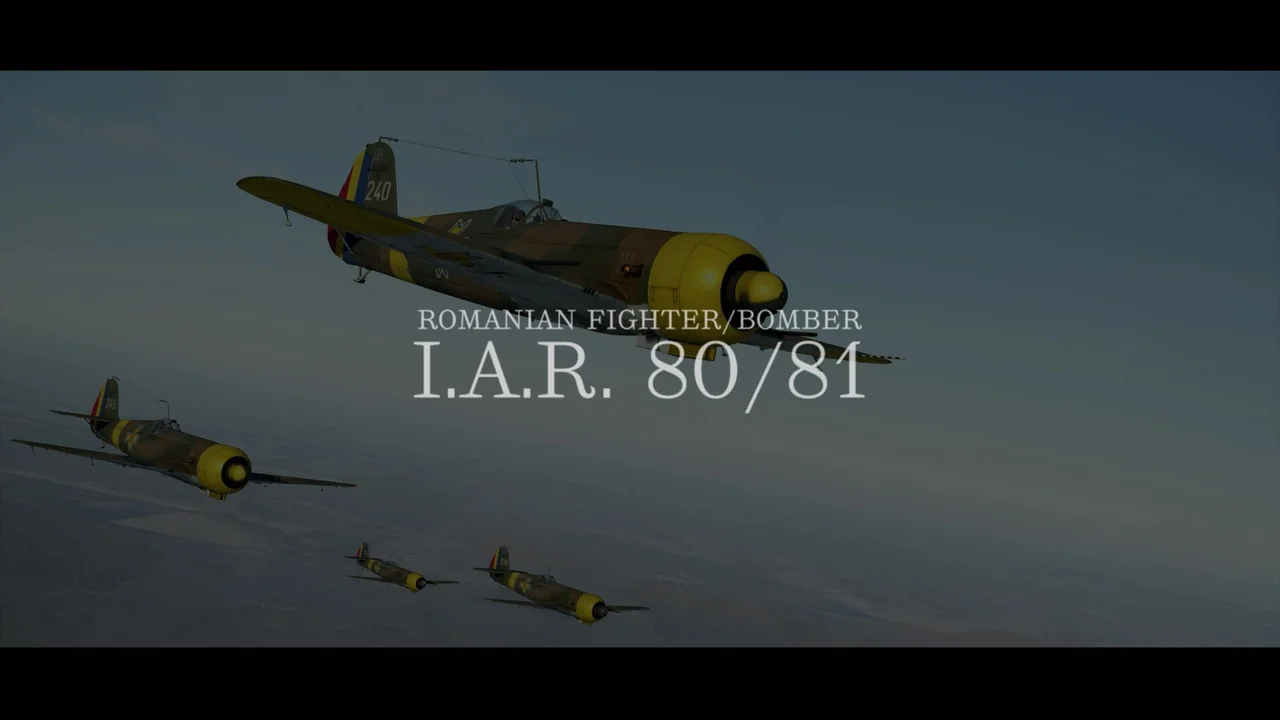
IL-2 Sturmovik: I.A.R. 80-A and 80-B Collector Planes adds the Romanian I.A.R. 80-A and I.A.R. 80-B aircraft to IL-2 Sturmovik: Battle of Stalingrad. You can fly them in Quick Mission Builder, Advanced Quick Mission Generator, Multiplayer and Career mode. In Career mode, the aircraft are available in the Battle of Stalingrad and Battle of Kuban campaigns.
The I.A.R. 80
Designed by Industria Aeronautică Română in the late 1930s, the I.A.R. 80 was a Romanian low-wing monoplane that first flew in 1939. Its first production aircraft were completed in January 1941, and I.A.R. 80s entered combat against the Soviet Union on the first day of Operation Barbarossa, June 22, 1941. They remained in service with the Royal Romanian Air Force until the end of World War II in May 1945.
The aircraft initially carried Belgian-made Fabrique Nationale FN 7.92 mm light machine guns, licensed versions of the Browning M1919. These were later replaced by 13.2 mm FN heavy machine guns and German 20 mm MG FF/M and MG 151/20 cannons. In 1941, the I.A.R. 80 was adapted into the I.A.R. 81 dive bomber, which used a bomb cradle beneath the fuselage to move a released bomb clear of the propeller.
I.A.R. 80s and 81s fought in the Battle of Stalingrad and later over the Kuban and Crimea during 1943 and 1944. From August 1943, I.A.R. 80s also defended the Ploesti oil fields against US Army Air Force B-24 bombers. After Romania joined the Allies in August 1944, I.A.R. 80s and 81s fought alongside Soviet forces until the war ended.
Campaigns and aircraft
In Career mode, the aircraft are available with these Romanian formations:
- Battle of Stalingrad: Grp. 6 BoPi ARR and Grp. 8 Vânătoare ARR.
- Battle of Kuban: I.A.R. 80-A with Grp. 3 Vânătoare ARR and I.A.R. 80-B with Grp. 4 Vânătoare ARR.
The 'Short' I.A.R. 80-A has six wing-mounted FN Browning 7.92 mod 1938 machine guns, with 2,400 rounds in total and a rate of fire of 1,500 rounds per minute. It is 8.9 m long, has a 10.5 m wingspan and a wing area of 16.1 m². The 'Long' I.A.R. 80-B carries four wing-mounted 7.92 mm FN Browning 7.92 mod 1938 machine guns with 1,600 rounds, plus two wing-mounted FN Browning 13.2 mm machine guns with 350 rounds; their rates of fire are 1,500 and 1,080 rounds per minute, respectively. The 80-B is 8.97 m long, has an 11.0 m wingspan and a wing area of 16.5 m².
Modifications
The aircraft have these available modifications:
- I.A.R. 80-B series 181–200: replaces two 7.92 mm machine guns with 13.2 mm guns and adds a new headrest and sturdier flaps. These changes add 14.7 kg and reduce speed by 1 km/h.
- I.A.R. 80-C series 251–290: carries four 7.92 mm machine guns and two 20 mm MG FF/M guns, and adds tail struts, a new air filter, a second oil radiator, and a sturdier fuselage and flaps. It adds 24 kg and reduces speed by 12 km/h.
- I.A.R. 80-M: carries two 7.92 mm machine guns and two 20 mm MG 151/20 guns, and adds tail struts, a new air filter, a second oil radiator, a late-type headrest, and a sturdier fuselage and flaps. It adds 62 kg and reduces speed by 9 km/h.
- I.A.R. 81 series 151–175: carries a 249 kg SC 250 centerline bomb and two 55 kg SC 50 underwing bombs, and adds tail struts and sturdier flaps. With racks, it adds 379 kg and reduces speed by 32 km/h before bomb release and 14 km/h afterward.
- I.A.R. 81-C series 301–450: carries two 7.92 mm machine guns and two 20 mm MG 151/20 guns, as well as a 249 kg SC 250 centerline bomb and two 55 kg SC 50 underwing bombs. It adds tail struts and sturdier flaps; with racks, it adds 427 kg and reduces speed by 41 km/h before bomb release and 19 km/h afterward.
Paint schemes
The aircraft include alternative national markings, 1943 and 1944 paint schemes, and Allied markings, each with a customizable tactical number. Historical schemes include:
- "Mouse Knight": Escadrilla 53 Vânătoare, Grupul 5, Mamaia airfield, July 1943.
- "Mamy": Escadrilla 47 Vânătoare, Grupul 9, Pipera airfield, Summer 1942.
- Escadrilla 41 Vânătoare, Flotila 2 Vanatore, Stalingrad Front, late Autumn 1942.
- Escadrilla 61, Vanatore BoPi, Tirgsor airfield, 1942.
- Slt. Av. Petre Mihăilescu, Escadrilla 64, Roșiori de Vede airfield, June 1944.
- "Skull and bones": Escadrilla 64, Grupul 4, 1944.
- Escadrilla 65, Grupul 2, Zvolen airfield, April 1945.
- I.A.R. 80-B No. 225, Escadrilla 42 Vânătoare, Grupul 8, 1942.
- I.A.R. 80-C No. 254, Escadrilla 43 Vânătoare, August 1944.
- "Lenuta": I.A.R. 81-C No. 429, Escadrilla 67 Vânătoare, Grupul 2, Gheraesti/Bacău, June 1944.
- I.A.R. 81-C No. 448, Escadrilla 67, Grupul 2, Miskolc, April 1945.
- "Bambi": I.A.R. 81-C No. 320, Escadrilla 61, Popești-Leordeni, June 1944; the squadron emblem showed Bambi talking to Mrs Quail and her chicks.
Flight and engine details
The aircraft use an I.A.R. 14 K. IV. C-32 engine. Emergency power is rated at 1,050 HP at sea level and 1,100 HP at 2,700 m; nominal power is 930 HP at sea level and 1,000 HP at 3,200 m. Nominal mode is unlimited at 2,300 RPM and 850 mm Hg, while emergency mode is limited to three minutes at 2,300 RPM and 935 mm Hg. The rated oil-temperature range at the engine output is 40–110 °C, with a maximum of 120 °C.
The I.A.R. 80 weighs 1,980 kg empty, 2,293 kg at minimum weight with no ammunition and 10% fuel, and 2,650 kg at standard weight. The 80-B weighs 2,093 kg empty, 2,522 kg at minimum weight with no ammunition and 10% fuel, and 2,745 kg at standard weight. Maximum takeoff weight is 3,030 kg; fuel capacity is 324 kg or 450 l, and useful load is 1,050 kg.
The indicated stall speed in flight configuration is 154–162 km/h, falling to 143–151 km/h in takeoff or landing configuration. The dive speed limit is 750 km/h, maximum load factor is 12 G, and stall angle of attack is 16.0° in flight configuration and 13.8° in landing configuration. The service ceiling is 10,500 m. Climb rates are 14.1 m/s at sea level, 13.6 m/s at 3,000 m and 9.7 m/s at 6,000 m for the I.A.R. 80; for the 80-B they are 13.9 m/s at sea level, 13.1 m/s at 3,000 m and 9.4 m/s at 6,000 m.
At sea level, maximum true airspeed in nominal and emergency modes is 433 and 450 km/h for the I.A.R. 80, and 427 and 447 km/h for the 80-B. At altitude, the I.A.R. 80 reaches 511 km/h in nominal mode at 4,700 m and 514 km/h in emergency mode at 3,800 m; the 80-B reaches 505 km/h in nominal mode at 4,700 m and 511 km/h in emergency mode at 3,800 m. Maximum performance turn time at sea level is 17.8 seconds at 300 km/h IAS. Flight endurance at 3,000 m is 1.9 hours at 350 km/h IAS. Takeoff speed is 150–180 km/h, glideslope speed 200–220 km/h and landing speed 170–180 km/h, with a landing angle of 14.2°.
The performance figures use the international standard atmosphere. Flight-performance ranges account for possible aircraft mass ranges; maximum speeds, climb rates and turn times use standard aircraft mass. Climb rates are given at nominal power and turn times at emergency power. The I.A.R. 80 entered combat in Summer–Autumn 1941, while the 80-B series debuted in Autumn 1942.
Operating the aircraft
The aircraft has no constant-speed propeller governor, so you control propeller speed by changing the pitch manually and need to monitor RPM carefully, especially in a dive. Acceleration can spin up the propeller beyond its maximum RPM and cause engine failure. There is no cylinder-head temperature gauge, only an oil-temperature gauge; the oil radiator is not adjustable, except that the I.A.R. 80-M, 80-C and 81-C modifications have a second adjustable oil radiator. The aircraft also has an elevator trimmer.
Mixture control is automated: the regulator maintains the selected mixture and enriches it automatically at low and full throttle, with the center position of the control lever setting the optimum mixture. Hydraulic flaps can be set to any angle up to 60°, but there is no flap-position indicator. In the dive-bomber versions, fully extended flaps act as an air brake.
Differential pneumatic wheel brakes share a control lever. Holding the brake lever while using the rudder pedal gradually releases the brake on the opposite wheel, making the aircraft swing to one side or the other. The hydrostatic fuel gauge shows total fuel remaining only when its manual sucker lever is pressed.
To release bombs, you first switch on the bomb-release system, then switch it off manually after dropping them. While the system is on, the flaps extend fully as an air brake and retract automatically when you press the bomb-release button or switch the system off. The system can release only the centerline bomb or all three bombs at once. The gunsight lets you adjust target distance and target base; in dive-bomber versions, you can also adjust its tilt. A sliding sun filter is fitted to the gunsight.
Frequently asked questions
The best price for IL-2 Sturmovik: Battle of Stalingrad IL-2 Sturmovik: I.A.R. 80-A and 80-B Collector Planes is $24.99 at Steam. It is the only shop with an offer that activates in your country.
No. IL-2 Sturmovik: Battle of Stalingrad IL-2 Sturmovik: I.A.R. 80-A and 80-B Collector Planes is DLC and only works with IL-2 Sturmovik: Battle of Stalingrad.
The minimum requirements for IL-2 Sturmovik: Battle of Stalingrad are: Windows 10, Intel Core i5, 16 GB RAM, 95 GB storage. It runs on Windows only. The recommended specs are in the System requirements section.
Yes. IL-2 Sturmovik: Battle of Stalingrad has multiplayer and a single-player mode. It supports online co-op and online PvP.
No. Valve rates IL-2 Sturmovik: Battle of Stalingrad as Unsupported on the Steam Deck.
Steam lets publishers create keys to sell in other shops. Once you activate a key, the game is yours to keep, just like a store purchase.
Disclaimer: CD keys have an inherent 1–2% average failure rate. Check the shop terms for buyer protection info. Steam offers no buyer protection for keys bought in other shops and doesn't refund them.
Similar games

X-Plane 11
$29.99
1 offer
Combat Wings: Battle of Britain
−88%$0.59
$4.9923 offers
Microsoft Flight Simulator X: Steam Edition
$24.99
2 offers
Project Wingman
−53%$11.72
$24.9915 offers
Ace Combat 7: Skies Unknown
−77%$13.48
$59.9923 offers
Squad 44
−82%$3.47
$19.9924 offers
VTOL VR
−75%$7.43
$29.9912 offers

Battlefield V
$8.67
10 offers
Scramble: Battle of Britain
−46%$15.99
$29.9919 offers

Bomber Crew
−90%$1.55
$15.9926 offers
IL-2 Sturmovik: Cliffs of Dover Blitz
−86%$1.33
$9.9917 offers
European Air War
$9.99
2 offers