

Buy IL-2 Sturmovik: Battle of Stalingrad IL-2 Sturmovik: Hs 129 B-2 Collector Plane PC key
Offers


Screenshots
1 / 11
IL-2 Sturmovik series
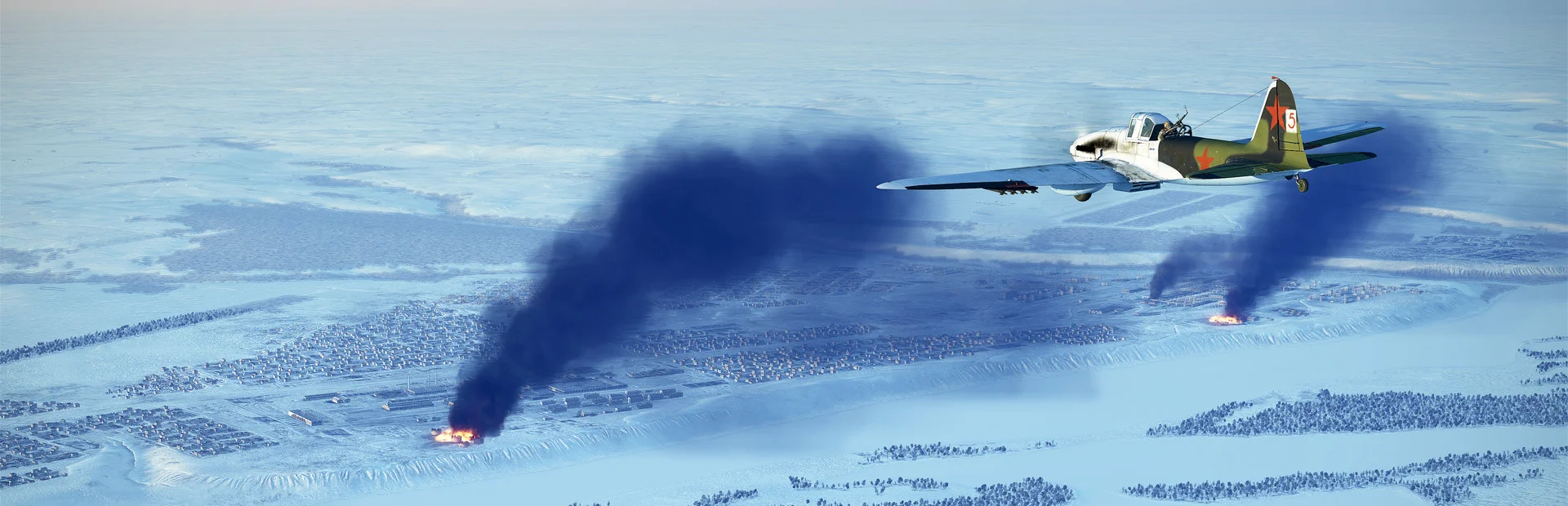
About IL-2 Sturmovik: Battle of Stalingrad IL-2 Sturmovik: Hs 129 B-2 Collector Plane
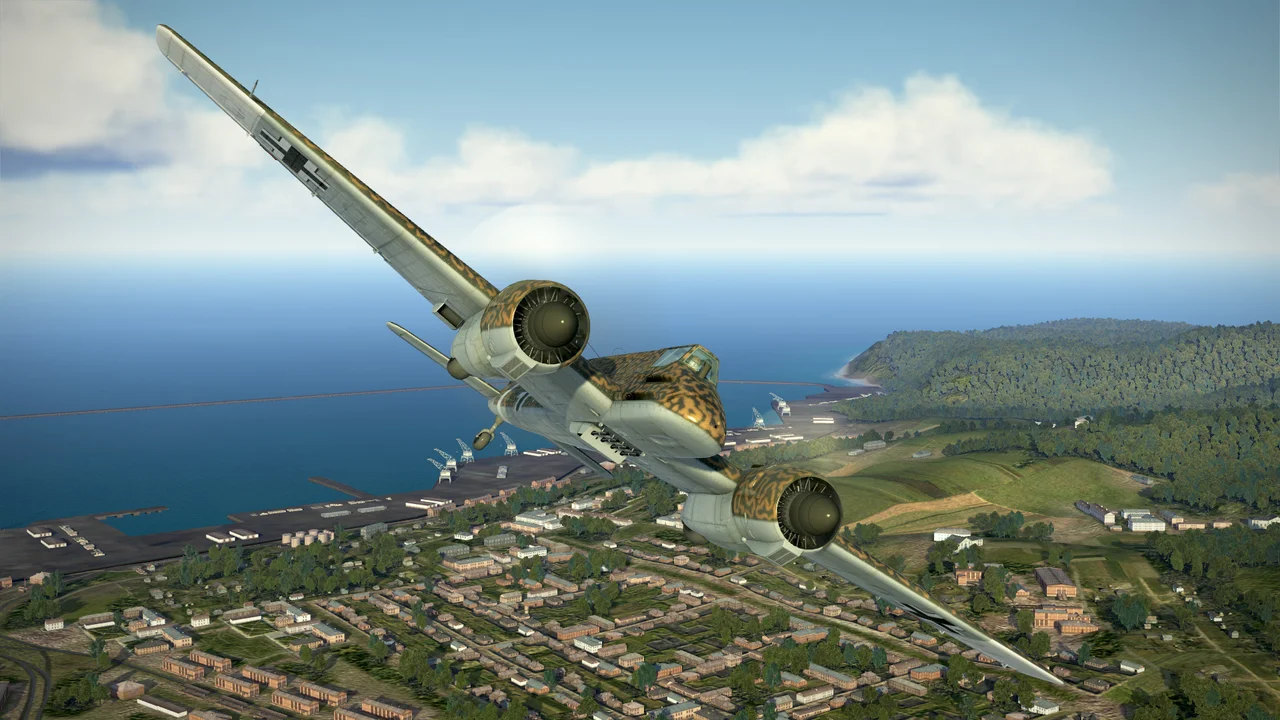
The IL-2 Sturmovik: Hs 129 B-2 Collector Plane adds a flyable Hs 129 B-2, an armored ground-attack aircraft that became a Luftwaffe anti-tank plane during the second part of the war. Known as the “Duck,” it first appeared in May 1942 on the southern sector of the Soviet-German front and saw action at Stalingrad, Kuban and Kursk, as well as in North Africa. Anti-tank squadrons flew it to frontline areas where the enemy threat was greatest.
Missions and modes
You can fly the Hs 129 B-2 in Quick Mission Builder and Multiplayer, and in Career mode during the Battle of Stalingrad and Battle of Kuban timeframes.
Weapons and modifications
The aircraft’s default armament consists of two 7.92 mm MG 17 machine guns, with 1,000 rounds and a rate of fire of 1,200 rounds per minute, and two 20 mm MG 151/15 guns, with 250 rounds each and a rate of fire of 700 rounds per minute. It can carry up to six 55 kg SC 50 general-purpose bombs or one 249 kg SC 250. Its available modifications include:
- Two 20 mm MG 151/20 guns, with 250 rounds each and a rate of fire of 700 rounds per minute; adds 14 kg and causes a minor speed loss.
- Four 7.92 mm MG 17 machine guns, with 1,000 rounds total and a rate of fire of 1,200 rounds per minute; adds 195 kg and causes a minor speed loss.
- A 30 mm MK 101 cannon with 30 rounds and a rate of fire of 250 rounds per minute; adds 179 kg and reduces speed by 6 kph.
- A 30 mm MK 103 cannon with 80 rounds and a rate of fire of 400 rounds per minute; adds 234 kg and reduces speed by 6 kph.
- A fixed-loop Peilrahmen PR 16 radio compass; adds 10 kg and causes a minor speed loss.
- A rearview mirror; adds 1 kg and reduces speed by 1 kph.
Aircraft specifications
The Hs 129 B-2 is 9.7 m long, has a wingspan of 14.2 m and a wing surface of 28.9 m². Its Gnome-Rhone 14 M engine produces a maximum of 700 HP in take-off mode at sea level, 580 HP in combat mode at sea level and 650 HP in combat mode at 4,000 m. Nominal engine mode is unlimited at 2,350 RPM and 1.1 ATA; combat power is available for up to 30 minutes at 2,750 RPM and 1.25 ATA, and take-off power for up to one minute at 3,030 RPM and 1.5 ATA. The supercharger has a single gear.
Empty weight is 3,992 kg; minimum weight with no ammunition and 10% fuel is 4,200 kg; standard weight is 4,756 kg; and maximum take-off weight is 5,170 kg. Fuel load is 451 kg (610 l), and useful load is 1,178 kg.
Flight performance
The figures below use the international standard atmosphere. Flight-performance ranges account for possible aircraft mass ranges; maximum speeds, climb rates and turn times are for standard aircraft mass. Climb rates and turn times are given at combat power.
- Indicated stall speed in flight configuration: 143–159 km/h; in take-off/landing configuration: 136–150 km/h.
- Dive speed limit: 670 km/h; maximum load factor: 9 G.
- Stall angle of attack: 20.0° in flight configuration and 18.0° in landing configuration.
- Maximum true airspeed in combat mode: 349 km/h at sea level and 396 km/h at 3,000 m.
- Service ceiling: 7,000 m.
- Climb rate: 8.4 m/s at sea level, 8.1 m/s at 3,000 m and 2.6 m/s at 6,000 m.
- Maximum-performance turn: 30.0 seconds at sea level at 255 km/h IAS; 46.0 seconds at 3,000 m at 270 km/h IAS.
- Flight endurance at 3,000 m: 2.1 hours at 300 km/h IAS.
- Take-off speed: 145–155 km/h; glideslope speed: 180–200 km/h; landing speed: 135–145 km/h; landing angle: 10.6°.
Operation features
Propeller RPM can be controlled manually by changing the propeller pitch; in automatic mode, the RPM remains at 2,750. The engine control lever sets pressure up to combat mode at 1.25 ATA. To use take-off mode, set the boost lever to 1.5 ATA and the propellers to 3,030 RPM. Mixture control is automatic, though manually leaning the mixture reduces fuel consumption during flight. Oil radiator shutters operate automatically and have no manual control.
The propellers have a feathering system to reduce drag from a windmilling propeller after engine damage. The aircraft has pitch and yaw trimmers only, and independent hydraulic controls for the left and right wheel brakes, operated by pressing the upper part of the rudder pedal. Hydraulic landing flaps can be extended to any angle up to 40° or set to the fixed take-off position. The tail wheel turns freely and cannot be locked, so take-off and landing require accurate rudder-pedal control.
Fuel gauges on the engine nacelles show the remaining fuel in the wing tanks, but not the central tank. The aircraft has no oxygen supply system, and flying above 4,000 m is forbidden. Its electric bomb-release controller drops bombs one at a time, and the gunsight has a sliding sun filter.
Skins
The plane includes these skins:
- Standard pattern.
- Standard pattern with winter camouflage, Stalingrad, January 1943.
- Hptm. Paul-Friedrich Darjes, II./Schl.G.1 commander, Voroshilovgrad, January 1943.
- PzJgSt./JG51, Stalingrad, January 1943.
- Oblt. Hans Dornemann, 4.(Pz.)/Schl.G.1 commander, Kuban, May 1943.
- Oblt. Rudolf-Heinz Ruffer, 8.(Pz.)/Schl.G.1 commander, Kuban, May 1943.
- PzJgSt./JG51, Kuban, March 1943.
- Hptm. Bruno Meyer, 4.(Pz.)/Schl.G.2 commander, Lybia, November 1942.
- Lt. Franz Oswald, 8.(Pz.)/Schl.G.2 commander, Tunisia, April 1943.
- Lt. Walter Krauze, 10.(Pz.)/SG9 commander, Proskurov, February 1944.
- Hptm. Hans-Günther Marufke, 12.(Pz.)/SG9 commander, Kishinev, Spring 1944.
- 3./Ergänzungs-Zerstörergruppe, Deblin-Irena, Spring 1943.
- Lt. Av. Rez. Vasile Antonescu, Esc. 41 Asalt, Eastern front, Winter 1943–44.
- Lt. Av. Gheorghe Claru, Esc. 42 Asalt, Romania, Spring 1944.
- Lt. Av. Lazăr Munteanu, Esc. 60 Asalt, Eastern front, Autumn 1943.
- Lt. Av. Nikolae Serescu, Esc. 42 Asalt commander, Eastern front, Winter 1943–44.
Frequently asked questions
The best price for IL-2 Sturmovik: Battle of Stalingrad IL-2 Sturmovik: Hs 129 B-2 Collector Plane is $19.99 at Steam. It is the only shop with an offer that activates in your country.
No. IL-2 Sturmovik: Battle of Stalingrad IL-2 Sturmovik: Hs 129 B-2 Collector Plane is DLC and only works with IL-2 Sturmovik: Battle of Stalingrad.
The minimum requirements for IL-2 Sturmovik: Battle of Stalingrad are: Windows 10, Intel Core i5, 16 GB RAM, 95 GB storage. It runs on Windows only. The recommended specs are in the System requirements section.
Yes. IL-2 Sturmovik: Battle of Stalingrad has multiplayer and a single-player mode. It supports online co-op and online PvP.
No. Valve rates IL-2 Sturmovik: Battle of Stalingrad as Unsupported on the Steam Deck.
Steam lets publishers create keys to sell in other shops. Once you activate a key, the game is yours to keep, just like a store purchase.
Disclaimer: CD keys have an inherent 1–2% average failure rate. Check the shop terms for buyer protection info. Steam offers no buyer protection for keys bought in other shops and doesn't refund them.
Similar games

X-Plane 11
$29.99
1 offer
Combat Wings: Battle of Britain
−88%$0.59
$4.9923 offers
Microsoft Flight Simulator X: Steam Edition
$24.99
2 offers
Project Wingman
−53%$11.72
$24.9915 offers
Ace Combat 7: Skies Unknown
−77%$13.48
$59.9923 offers
Squad 44
−82%$3.47
$19.9924 offers
VTOL VR
−75%$7.43
$29.9912 offers
Battlefield V
$8.67
10 offers
Scramble: Battle of Britain
−46%$15.99
$29.9919 offers
Bomber Crew
−90%$1.55
$15.9926 offers
IL-2 Sturmovik: Cliffs of Dover Blitz
−86%$1.33
$9.9917 offers
European Air War
$9.99
2 offers