

Buy IL-2 Sturmovik: Battle of Stalingrad IL-2 Sturmovik: Arado Ar 234 B-2 Collector Plane PC key
Offers


Screenshots
1 / 7
IL-2 Sturmovik series
About IL-2 Sturmovik: Battle of Stalingrad IL-2 Sturmovik: Arado Ar 234 B-2 Collector Plane
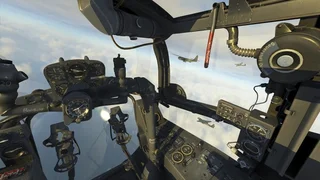
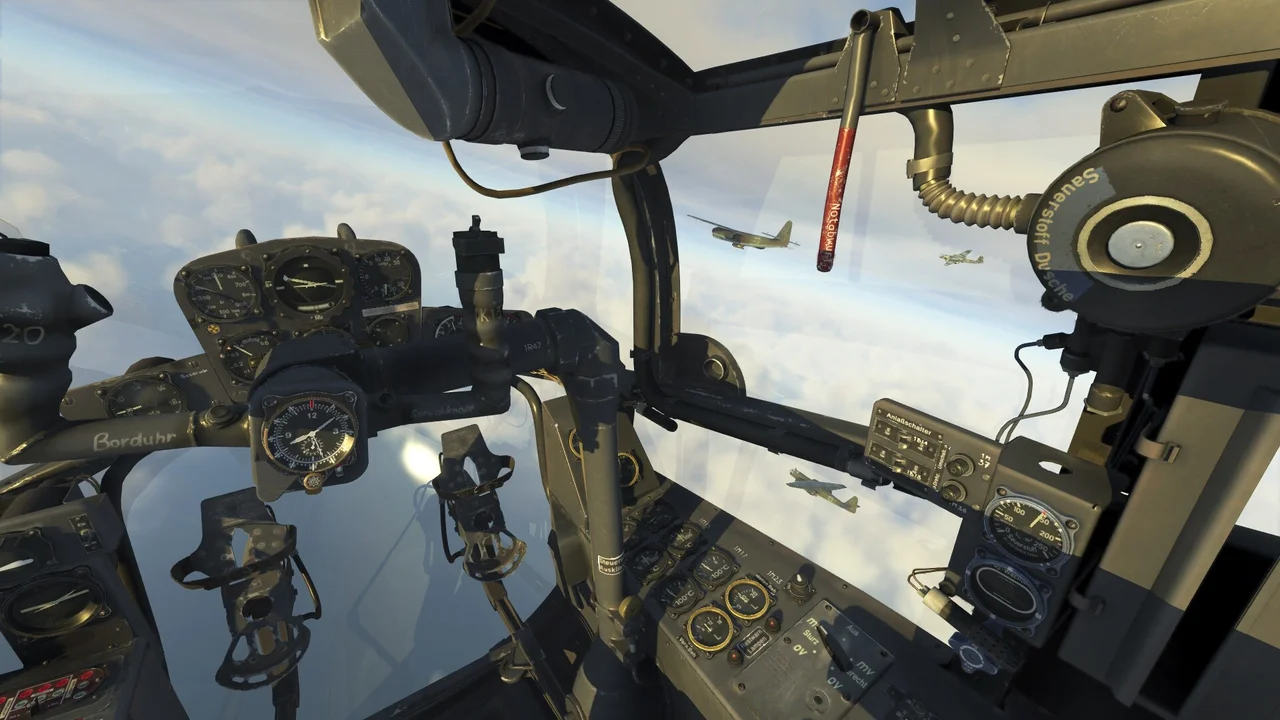
IL-2 Sturmovik: Arado Ar 234 B-2 Collector Plane adds the Arado Ar 234 B-2 jet bomber to IL-2 Sturmovik: Battle of Stalingrad. You can fly it in Quick Mission Builder, Advanced Quick Mission Generator and Multiplayer, as well as in Career mode during the Battle of Normandy and Battle of Bodenplatte timeframes.
The Ar 234 B-2
Developed from the Ar 234 A reconnaissance aircraft, the Ar 234 B-2 was built as a bomber with conventional tricycle landing gear. It first entered operational service as a jet bomber in December 1944 and flew until the end of the war in Europe in May 1945. Around 210 Ar 234 B-series aircraft were built, about 100 of which saw combat.
The aircraft has two Junkers Jumo-004 B1 turbojets. Because the engines accelerate slowly, two jettisonable Walter HWK 109-500 rocket boosters can shorten the takeoff run. A tail-mounted drag chute can reduce the landing run. The plane can also be fitted with retractable cockpit-side mirrors for visual engine checks.
Bombing and reconnaissance
The slender fuselage limits the Ar 234 B-2 to three externally carried bombs: one beneath the fuselage and one beneath each engine nacelle. Its default armament is SC 250 and SC 500 general-purpose bombs; an SC 1000 bomb is also available as a modification. Early aircraft used a Lotfe 7K bombsight for horizontal bombing, but the plane was later used as a dive bomber, with a periscope showing the calculated bomb impact point. A BZA 1 B dive bombsight is fitted by default.
The aircraft can be equipped with cameras for reconnaissance missions. A modification also adds an underbelly gun pod with two 20 mm MG 151/20 cannons and 200 rounds, firing at 700 rounds per minute. The Ar 234 A had first seen action over the beaches of Normandy in early August 1944, and Ar 234 B-1 reconnaissance aircraft began service in September 1944. In combat, the Ar 234 B-2 typically carried a 500- or 1,000-kilogram bomb beneath the fuselage.
Armaments and modifications
- SC 1000: 1,090 kg general-purpose bomb, with a 31 km/h speed loss.
- Lotfe 7K bombsight: enables horizontal bombing; adds 33 kg and reduces speed by 3 km/h.
- MG 151/20 gun pod: two 20 mm cannons with 200 rounds, firing at 700 rounds per minute; adds 245 kg with ammunition and reduces speed by 22 km/h.
- Walter HWK 109-500 boosters: two jettisonable takeoff-assist units, providing 1,000 kgf of additional thrust for 35 seconds.
- Drag chute: reduces landing distance; adds 32 kg and reduces speed by 2 km/h.
- Photo equipment: enables reconnaissance missions; adds 204 kg and reduces speed by 9 km/h with the photo bay doors open, or 1 km/h with them closed.
- Retractable mirrors: provide a view of the engines; add 1 kg and reduce speed by 5 km/h.
Aircraft performance
The aircraft is 12.6 m long, has a 14.4 m wingspan and a wing area of 26.4 m². Its fuel capacity is 3,181 kg (3,790 litres), and its maximum takeoff weight is 10,470 kg. At a target weight of 6,950 kg, with one SC 500 bomb and 45% fuel, it reaches a maximum true airspeed of 703 km/h at sea level, 728 km/h at 6,000 m and 702 km/h at 9,000 m in Maximal engine mode. Its service ceiling is 10,500 m, and its flight endurance at 6,000 m and 400 km/h IAS is 4 hours 15 minutes.
The Jumo-004 B1 engines have Nominal mode at 8,400 RPM for unlimited time and Maximal mode at 8,700 RPM for up to 15 minutes. The aircraft has a three-channel autopilot, trim for the course and pitch, and hydraulically actuated flaps and hovering ailerons. Its systems also include two fuel tanks with level indicators and warning lights that illuminate when less than 250 litres remain.
Paint schemes
The aircraft includes standard and alternative paint schemes, with winter variants and customizable tactical numbers. It also includes liveries for named aircraft and units:
- 76 and Einsatzstaffel/KG 76, Münster-Handorf, Germany, November 1944.
- Ofw. Friedrich Bruchlos, 76, Münster-Handorf, Germany, late 1944 to early 1945. This aircraft was shot down over Remagen on March 9, 1945.
- Hptm. Josef Regler, 76 Commander, Achmer, Germany, late 1944 to early 1945. This aircraft was shot down on February 22, 1945.
- Major Hans-Georg Bätcher, Stab III./KG 76 Commander, Burg, Germany, February 1945.
- Lt. Alfred Frank, 76, Stavanger-Sola, Norway, May 1945.
- Kommando Sperling, Rheine, Germany, April 1945.
- Oblt Erich Sommer, Kommando Hecht, Biblis, Germany, December 1944.
Frequently asked questions
The best price for IL-2 Sturmovik: Battle of Stalingrad IL-2 Sturmovik: Arado Ar 234 B-2 Collector Plane is $19.99 at Steam. It is the only shop with an offer that activates in your country.
No. IL-2 Sturmovik: Battle of Stalingrad IL-2 Sturmovik: Arado Ar 234 B-2 Collector Plane is DLC and only works with IL-2 Sturmovik: Battle of Stalingrad.
The minimum requirements for IL-2 Sturmovik: Battle of Stalingrad are: Windows 10, Intel Core i5, 16 GB RAM, 95 GB storage. It runs on Windows only. The recommended specs are in the System requirements section.
Yes. IL-2 Sturmovik: Battle of Stalingrad has multiplayer and a single-player mode. It supports online co-op and online PvP.
No. Valve rates IL-2 Sturmovik: Battle of Stalingrad as Unsupported on the Steam Deck.
Steam lets publishers create keys to sell in other shops. Once you activate a key, the game is yours to keep, just like a store purchase.
Disclaimer: CD keys have an inherent 1–2% average failure rate. Check the shop terms for buyer protection info. Steam offers no buyer protection for keys bought in other shops and doesn't refund them.
Similar games

X-Plane 11
$29.99
1 offer
Combat Wings: Battle of Britain
−88%$0.59
$4.9923 offers
Microsoft Flight Simulator X: Steam Edition
$24.99
2 offers
Project Wingman
−53%$11.72
$24.9915 offers
Ace Combat 7: Skies Unknown
−77%$13.48
$59.9923 offers
Squad 44
−82%$3.47
$19.9924 offers
VTOL VR
−75%$7.43
$29.9912 offers
Battlefield V
$8.67
10 offers
Scramble: Battle of Britain
−46%$15.99
$29.9919 offers

Bomber Crew
−90%$1.55
$15.9926 offers
IL-2 Sturmovik: Cliffs of Dover Blitz
−86%$1.33
$9.9917 offers
European Air War
$9.99
2 offers