

Hero's Guild
Offers


Trailers & screenshots
1 / 27


About Hero's Guild
Hero's Guild is a guild-management roguelike about recruiting heroes, training them and sending them into dangerous dungeons. Your heroes have personalities, relationships, convictions and ambitions of their own, so you guide the guild without fully controlling how its members behave. Death is permanent, and the people and stories lost along the way change the guild.
Heroes and relationships
Each hero arrives with a personality that shapes how they make friends, start fights, fall in love or hold grudges. Relationships range from hostility to devotion: heroes can argue and reconcile, marry at your chapel and form bonds that lead to teamwork—or grief when something goes wrong. They may also intervene to protect close friends from killing blows, while devoted lovers may sacrifice themselves without being asked.
Heroes have moods and personal needs. If pushed too hard, they may desert, go berserk, reveal secrets that damage friendships or take a personal day. The tavern offers drinks, feasts, gambling nights and a bard as ways to address their troubles, though none is guaranteed to work. Each hero is also quietly saving for a personal goal, such as a better cloak, a small house or a name that outlasts them.
Heroes hold convictions about matters such as mercy, money and loyalty. Those beliefs can shift in response to what you order them to do; for example, leaving a wounded stranger in a crypt can change a hero's mind. They also develop attachment to their equipment, from Comfortable to Soulbound, and removing a soulbound weapon can sharply damage their mood. Heroes may favor or boycott particular forges, whose distinct equipment styles and scandals can affect the economy and its customers.
Lead the guild
You build and upgrade facilities, including a tavern for recruitment and morale, forges, workshops and alchemy labs for crafting, a chapel for blessings and burials, an infirmary and hero quarters. The placement of quarters matters because adjacency provides bonuses and where heroes sleep affects how they wake. A materials market uses dynamic pricing, and rising through guild ranks unlocks expedition slots, better recruits and missions that require specific answers.
Your guild develops a moral identity across Valor, Wealth and Order, with significant decisions nudging these three axes. That identity affects what the guild attracts and the challenges it faces. Nightly tavern events compete for your limited attention points; situations you leave unattended can worsen by the next day. Other events respond to your roster, including simmering rivalries, overlooked veterans and heroes reconsidering their careers. If you do not resolve them, the game does so for you.
Each hero keeps a chronicle that records achievements, relationships, dungeons survived, friends lost and decisions at the tavern. These autobiographies build into individual life stories, and heroes who live long enough can retire. The guild holds them a party, whether or not it can afford one.
Expeditions and combat
Dungeons contain turn-based combat that resolves in front of you. Heroes choose their own targets and spells according to one of five tactical presets—Reckless, Aggressive, Balanced, Cautious or Survival—as well as their companions and how they feel about them. You can pause, change the battle speed to single, double or quadruple, and switch presets during a fight. You can also spend a limited number of command points, refreshed each floor, on abilities such as a battle cry, shield wall, emergency heal, cleanse, guaranteed round of critical hits or an order to retreat with what you are carrying.
You can hand an expedition over to run unsupervised while you manage the guild; events continue, and nobody intervenes on your heroes' behalf. Dungeons have fog of war and moral events, such as encounters with a wounded traveler, a sealed coffin or an imprisoned mage. Choices have immediate and lasting consequences, and some events depend on a particular hero's traits, mood or relationships. Environmental hazards also test your party's composition: a Cleric can handle toxic gas, while a Ranger can address a collapsing ceiling; the wrong party may take damage and lose health.
There are seven dungeon environments, including forests with ambushes that come in threes, crypts where a Cleric's specialized training can prove its worth, and volcanoes where fire resistance matters. Heroes can be injured in specific body parts, including eyes, arms, legs and organs. Damage can reduce effectiveness, accuracy or speed, and destroyed parts can eventually be replaced with one of three tiers of prosthetics: a peg leg restores walking, a mechanical arm restores function, and an enchanted replacement can exceed the original.
Heroes can also fall ill. Some illnesses pass, while others leave chronic conditions that shorten a hero's career. The infirmary treats illness, the ward isolates patients, and some heroes develop drinking problems that may lead to detox and a difficult fortnight.
Classes and progression
The game has six classes connected by one large hexagonal passive tree. Each hero starts at their class node and spends a point each level to work outward. By endgame, a hero will have invested in roughly a quarter of the available tree, choosing among minor nodes, major notables and keystones that fundamentally change how they operate, each with a drawback. Cross-class bridges let heroes take abilities such as spell damage outside their class, at the cost of routing points. Respecs are free.
At level 25, each hero can face a solo tower trial. Surviving lets them choose an ascendancy that reshapes their role. There are 14 paths across the six classes, including the Champion, a Warrior focused on avoiding death, and the Puppeteer, a Necromancer who delegates to the dead. Each path has four trials, four points and ten nodes, of which a hero can fill four. Ascendancy choices are reversible.
Endgame modes
- Heroic Dungeons: Weekly rotating challenges with modifiers that call for specific builds.
- World Bosses: Raid bosses fought by several parties at once, with telegraphed mechanics to answer. The bosses include the Ancient Dragon, the Skeletal Lich and the Void Titan.
- The Abyssal Spire: An endless tower where enemies start at level 100 and grow stronger. You bring four heroes; there is no permadeath, but a leaderboard records how far you get.
- Quest Chains: Story campaigns, class-specific arcs and weekly bounties, with finale rewards that include named legendary items and, in two cases, a hero who joins the guild already equipped.
- Prestige Missions: World threats, legendary hunts and contracts that pay exceptionally well.
- Custom Dungeons: A beta mode for building dungeons, placing enemies and traps, and sharing creations with other guilds.
Permanent losses
A hero's death is permanent. Their friends grieve, lovers may not recover, and after three days the guild holds a burial ceremony and adds the hero's name to its memorial. The guild continues with one less member. The bonds between heroes can sometimes prevent a death, but they can also make a loss more painful.
Key features
- Recruit and manage heroes with independent personalities, relationships, convictions and goals.
- Build and upgrade guild facilities, manage a materials market and rise through guild ranks.
- Explore seven dungeon environments featuring moral choices, roster-dependent events and environmental hazards.
- Develop six classes through a shared passive tree and 14 ascendancy paths.
- Take on weekly Heroic Dungeons, World Bosses, the endless Abyssal Spire, quest chains, Prestige Missions and custom dungeons.
Frequently asked questions
The best price for Hero's Guild is $14.99 at Steam. It is the only shop with an offer that activates in your country.
The minimum requirements for Hero's Guild are: Windows 10, Intel Core i3, 4 GB RAM, 600 MB storage. It also runs on macOS. The recommended specs are in the System requirements section.
No. Hero's Guild is a single-player game.
Yes. Hero's Guild is the full base game. You need nothing else to play it.
Steam lets publishers create keys to sell in other shops. Once you activate a key, the game is yours to keep, just like a store purchase.
Disclaimer: CD keys have an inherent 1–2% average failure rate. Check the shop terms for buyer protection info. Steam offers no buyer protection for keys bought in other shops and doesn't refund them.
Similar games
The Last Spell
−93%$1.58
$24.9913 offers
Symphony of War: The Nephilim Saga
−96%$0.75
$19.9915 offers
Wildermyth
−62%$9.43
$24.9918 offers
Cyber Knights: Flashpoint
$29.99
1 offer
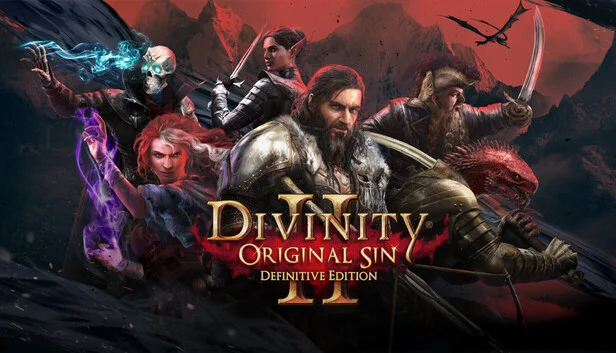
Divinity: Original Sin II
−63%$16.37
$44.9911 offers
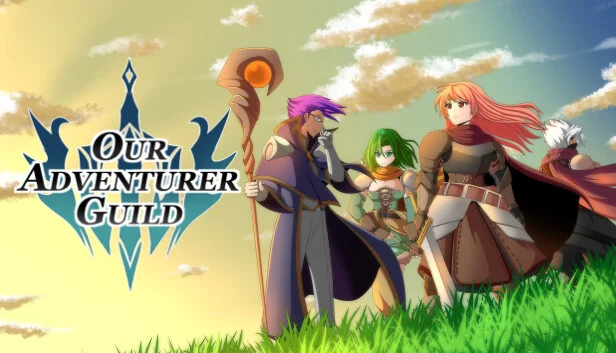
Our Adventurer Guild
−96%$0.54
$14.9910 offers
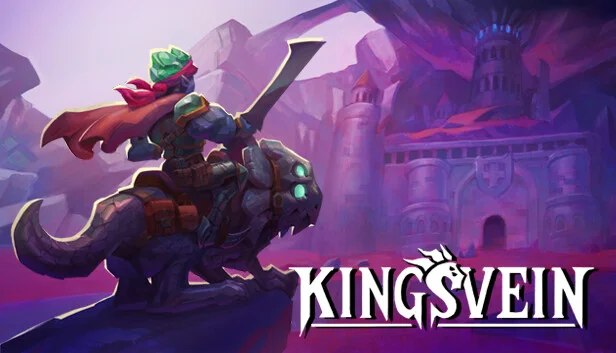
Kingsvein
$19.99
1 offer
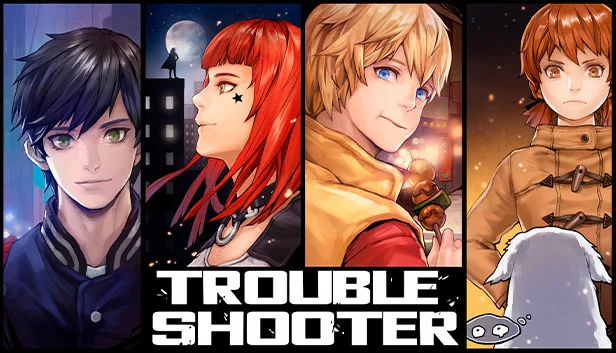
Troubleshooter: Abandoned Children
$24.99
1 offer
Dungeon Settlers
$24.99
1 offer
Darkest Dungeon II
−82%$6.96
$39.9920 offers
Tactics Ogre: Reborn
−71%$14.05
$49.9916 offers
Tactical Breach Wizards
−50%$9.99
$19.993 offers